
Margin in Forex Trading: A Guide for Kenyan Traders
📊 Learn how margin in forex trading helps Kenyan traders control bigger positions with less capital. Understand its risks and smart management tips to trade safely with confidence.
Edited By
Henry Walker
Forex trading in Kenya has gained traction, especially with many seeking ways to capitalise on currency fluctuations. One tool growing in popularity among Kenyan traders is forex signals shared on Telegram. These signals are essentially trade ideas or alerts about when and how to enter or exit trades in foreign exchange markets.
Telegram, known for its instant messaging features and group functionality, acts as a convenient platform for sharing such signals. Kenyan traders often join Telegram groups focused on forex to receive timely tips and market updates. These signals commonly include precise entries, stop-loss limits, and take-profit targets.
However, not all signals are trustworthy. It’s common to find Telegram groups that promise quick profits but lack solid analysis or transparency. Kenyan traders need to scrutinise providers by considering their track record, market experience, and community feedback before relying on their calls.
Using forex signals effectively means treating them as part of a broader strategy rather than blindly following orders. For example, a trader might cross-check signals with their own technical indicators or fundamental research. Also, managing risk by using sensible lot sizes and stop-loss levels is vital to protect capital from sudden market shifts.
Joining Telegram communities offers quick access to forex signals but always verify the credibility of signal providers before trading based on their advice.
Signals typically include entry price, stop-loss, and take-profit points
Telegram groups vary in reliability; look for evidence of past successful signals
Incorporate signals into your existing trading plan rather than following blindly
Use demo accounts to test signals without risking real cash
Be cautious of groups charging high fees without transparent performance records
In Kenya, where mobile internet and M-Pesa payments are widely accessible, hopping on Telegram for forex signals is straightforward. Yet, success depends on knowledge, scepticism, and effective risk management. This article will guide you through those aspects so you can make smart trading decisions in our local forex market environment.
Forex signals are essentially trade suggestions or alerts that guide traders on when to buy or sell specific currency pairs. For Kenyan traders using platforms like Telegram, these signals serve as timely nudges to catch market movements. Since forex trading can be fast-paced and complex, knowing what signals mean and how they work helps you make better decisions without staring at charts for hours.
Types of trading signals vary mainly between manual and automated ones. Manual signals come from experienced analysts who interpret market conditions and share their recommendations. For example, a Kenyan signal provider might send a notification saying: "Buy USD/KES at 111.50, target 112.00, stop loss 111.20." Automated signals, by contrast, are generated by computer algorithms that scan price data and technical indicators without human input.
Both types have practical use: manual signals often carry insight from real-world events like central bank announcements, while automated signals offer speed and consistency, which are handy for busy traders balancing other commitments.
How signals are generated depends on various methods. Some rely on technical analysis, where indicators such as moving averages or RSI (Relative Strength Index) suggest potential entry or exit points. Others might incorporate fundamental analysis, looking at economic reports or geopolitical news impacting currencies. For instance, if the US Federal Reserve hints at raising interest rates, the signal could advise buying USD pairs expecting strengthening.
Kenyan traders benefit when signal providers clearly explain their generation method because blind following without understanding risks making costly mistakes.
Common indicators and analysis methods used include:
Moving averages: To spot trend directions.
Support and resistance levels: To identify price zones where currency might reverse.
Candlestick patterns: Such as pin bars indicating possible market turns.
Momentum indicators like MACD to check if a trend is gaining strength.
These tools are popular because they can be quickly interpreted and applied across different timeframes, fitting various trading styles from scalping to swing trading.
Support for new and experienced traders comes through time-saving and confidence-building. A beginner who lacks market experience can rely on well-researched signals as a learning tool, while seasoned traders might use signals to validate their own analysis or discover fresh trade ideas. This dual role means signals act like an extra set of eyes, reducing stress especially during volatile times.
For example, a trader following a Kenyan forex group on Telegram may receive a signal during the East African business day, helping them act promptly without waiting for market reviews.
Limitations and risks involved with forex signals must be clear. No signal guarantees profit because the currency market can be unpredictable, swayed by sudden news or market sentiment shifts. Sometimes, signals may be delayed or based on outdated data, leading to poor trade entries.
Moreover, blindly following signals without managing risk – such as setting stop losses and controlling position size – can quickly drain your account. In Kenya, where many traders operate with modest capital, preserving funds matters a lot.
Always remember: signals are guides, not crystal balls. Combining them with your own study and cautious trade management is the surest way to succeed.
By understanding what forex signals mean and how they function, Kenyan traders are better placed to pick signals that suit their style, know when to trust them, and avoid the pitfalls that come with overreliance or poor-quality sources.
Telegram has steadily become a go-to platform for Kenyan forex traders to access trading signals quickly and efficiently. This is largely because Telegram mixes a simple user experience with features that fit the fast-paced, often spontaneous nature of forex trading. For Kenyan traders juggling busy schedules, from Nairobi hustlers to shamba farmers, Telegram offers practical ways to stay connected to the market.
Telegram is easy to set up and runs smoothly even on modest smartphones common in Kenya. Unlike some trading software that demands high-end devices or stable broadband, Telegram works well on 3G or 4G networks — a big plus for traders outside major towns. Its lightweight design means users don't need to stress about storage space or app crashes.
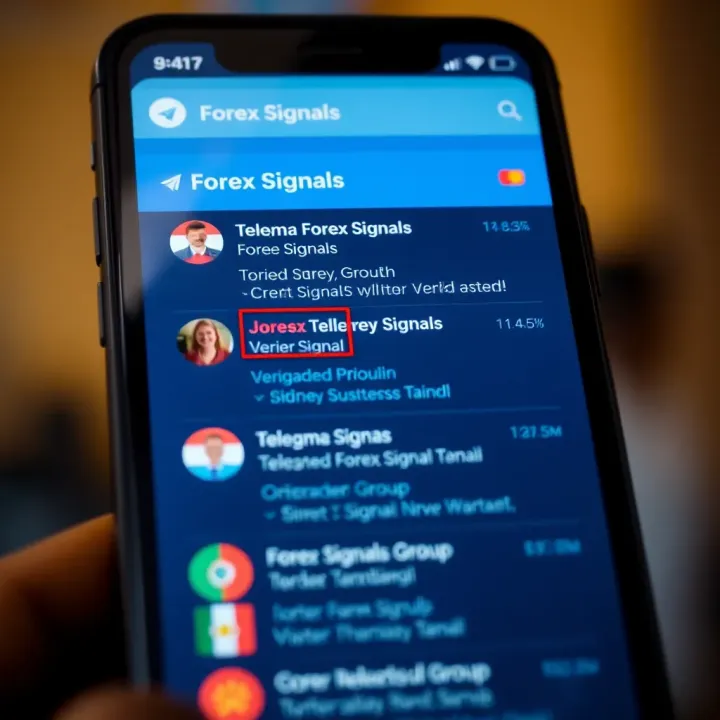
Navigating Telegram is straightforward. Opening channels, joining groups, and following signal posts do not require technical skills, making it friendly for those new to forex or mobile tech. Also, it supports multiple platforms: mobile, desktop, and even web access, allowing traders to check signals on the go or from their laptops during work breaks.
Forex markets react fast and so should a trader. Telegram's instant notifications ensure you get signals the moment they’re shared, helping avoid costly delays. For instance, when a signal advises to buy USD/KES at a certain price, quick alerts allow you to act before the price shifts.
These notifications can be customised so traders don’t miss critical messages or get overwhelmed by noise. This real-time aspect gives Kenyan traders an edge when timing market moves, especially during active sessions overlapping global forex hours.
Telegram’s group chats and channels support sharing not only text but also charts, voice notes, videos, and documents. This variety helps signal providers explain the reasoning behind each call, useful for those wanting to learn alongside trading.
Admins can pin important posts like daily market outlooks or risk warnings, keeping vital info front and centre. Channels also let traders interact via comments or polls, building a community feel that many find valuable when navigating the uncertainties of forex trading.
Telegram hosts both free and paid forex signal channels. Free signals provide basic calls and often come from newcomers or automated bots. While useful for beginners to test waters, these usually lack detailed analysis or reliable performance history.
Paid signals, on the other hand, are commonly offered by experienced analysts or professional teams and may charge monthly fees or require payment via M-Pesa. Kenyan traders opting for paid services should verify the provider’s credibility, as legitimate signals often offer detailed explanations and transparent past performance.
Some Telegram channels use automated bots to generate signals based on programmed algorithms and indicators. These bots respond quickly to market changes but might miss nuances like political events affecting the Kenyan shilling.
Human analysts bring judgement and contextual insight, factoring in market sentiment, economic news, and regional events. However, they could be slower to send signals during rapid market moves. Many channels combine both methods, giving signals generated by bots alongside commentary from experts.
Beyond just signals, Telegram houses mentorship groups where experienced Kenyan traders share tips, answer questions, and guide others through basic to advanced strategies. These groups provide a learning environment that supports skill-building rather than just signal-following.
Community groups also foster peer support which can be crucial when facing losses or market frustrations. Being part of a trusted circle lessens reliance on external signals alone, encouraging traders to develop personal analysis skills.
Telegram's blend of accessibility, real-time updates, and versatile community tools make it a practical choice for Kenyan forex traders looking to stay ahead in a fast-moving market.
Evaluating the credibility of forex signal providers on Telegram is a must to avoid costly mistakes. Many Kenyan traders rely on these signals to guide their forex trades, yet not all providers are trustworthy. Getting this right saves you from wasting money on poor signals and protects you from scams that are rife on Telegram. Understanding which providers are reliable helps you make smarter trading decisions and build your confidence in the market.
A reliable signal group openly shares its past performance, including both wins and losses. For example, a group posting weekly trading results over several months shows it has nothing to hide, which boosts trust. Just like a licensed duka is expected to keep receipts, a credible signal provider documents its success rates. If you see only glowing reports with no evidence or verification, be wary. Transparent history allows you to compare expected outcomes against your trading goals.
Good signal providers don’t just share buy or sell alerts; they explain the reasoning behind them. They might say, “We entered this EUR/USD position because the RSI indicator hit oversold levels and the support held.” This insight lets you learn and confirm signals with your own analysis. Kenyan traders benefit when providers clarify whether they use technical indicators, fundamental analysis, or a mix of both. Avoid groups that send signals without any context—that’s a red flag.
Hands-on group admins who answer questions and moderate conversations show responsibility. This two-way interaction builds a learning community rather than a one-sided broadcast. For instance, a Telegram group where members discuss trades, share ideas, and the admin gives timely feedback helps traders refine their skills. Moreover, active moderation discourages spam, scams, or misinformation, protecting members’ interests. In Kenya’s busy forex market, such engagement adds real value.
Any signal provider claiming 100% success or guaranteed returns should raise alarms. Forex trading is inherently risky; no one can promise profits without risk. Groups marketing "no loss" or "easy riches" are often baiting traders to pay for unreliable signals. Realistic providers discuss risk and reward, reminding you to trade cautiously. Remember, if it sounds too good to be true, it probably is.
Some groups push for immediate payments before delivering any signals. This high-pressure tactic is common among scam operators looking for quick cash without accountability. Reliable services often offer trial periods or free signals before requiring payment. Kenyan traders should be cautious if asked to pay large sums upfront without a transparent refund policy. Always confirm payment methods through secure channels such as M-Pesa or recognised banking platforms.
Watch out for groups sending a high volume of daily trades, many of which fail. Constant "hot tips" without solid analysis can drown you in noise and losses. For instance, a group sending dozens of signals daily with wildly varying strike prices often lacks discipline or expertise. Quality providers send fewer but well-researched calls aligned with clear strategies. In short, quality beats quantity in forex signals.
Staying alert to these signs helps Kenyan forex traders filter trustworthy Telegram providers from scams. It also encourages smarter, safer trading that fits your personal goals and limits losses.
By carefully checking a provider's track record, strategy transparency, and engagement, you can improve your chances in the forex market. Likewise, dodging groups promising impossible profits or demanding immediate payments keeps your money safe as you grow your trading skills.
Using forex signals on Telegram can give Kenyan traders an edge, but only if integrated wisely within a solid trading plan. Signals rarely work alone; they need to fit your objectives, risk tolerance, and strategy to be effective. This section breaks down how to make the most of these signals while keeping control of your trades.
Setting clear trading goals is essential before following any forex signal. You need to know what you want to achieve—whether it’s steady income, capital preservation, or aggressive growth. For instance, if you are a beginner aiming to gradually grow your KSh 50,000 trading account, it makes little sense to chase every high-risk signal promising quick profits. Clear goals help you filter signals that align with your appetite and timeframe, stopping you from jumping blindly into calls that don’t suit your trading style.
Risk management and position sizing go hand in hand with signal use. A single forex signal can suggest a trade, but you should always decide how much of your capital to risk on it. For example, risking 2% of your trading funds per trade is a commonly advised rule in Kenya’s trading circles. This way, even if a signal does not work out, your account survives to trade another day. Position size depends on stop-loss distance and your risk percentage, so always calculate how much to buy or sell accordingly, especially when signals come with specific entry and exit points.
Confirming signals with your own analysis protects you from blindly trusting any provider. Even when a signal looks promising, check the forex pairs involved against recent market news or your preferred technical indicators on platforms like MetaTrader. Suppose a signal advises buying EUR/USD, yet local European Central Bank announcements or US economic data are due. In that case, you might want to hold back or adjust your approach. This step builds your trading skills and keeps you alert to changing market conditions rather than relying solely on others’ calls.
Using M-Pesa and other payment methods securely for paid services is vital when subscribing to premium signal channels on Telegram. Always use transactions that offer some level of buyer protection. Avoid sending money via untraceable methods; M-Pesa, with its transaction logs and PIN protection, remains the safest option. Before paying any fee, confirm the legitimacy of the signal provider to avoid losing money to scams.
Choosing reputable brokers regulated in Kenya or internationally ensures your trades are executed properly and your funds are secure. Brokers authorised by the Capital Markets Authority (CMA) or recognised bodies like the Financial Conduct Authority (FCA) in the UK provide better safeguards. Many Kenyan traders prefer brokers like Exness or XM that accept M-Pesa payments and comply with international standards.
Keeping up with market news affecting forex pairs popular in Kenya is often overlooked but critical. Pairs like USD/KES, EUR/USD, and GBP/USD react heavily to economic indicators, political events, and central bank decisions. Following updates from sources like the Central Bank of Kenya or international financial news helps you understand why a signal was given and when to be cautious. For instance, signals during Kenya’s budget reading or US non-farm payroll releases should be assessed with care due to increased volatility.
Consistently combining forex signals from Telegram with your own goals, risk controls, and market awareness builds a stronger, smarter trading approach that fits Kenyan realities.
Understanding the legal and regulatory framework around forex signals in Kenya helps traders avoid scams and ensures they deal with legitimate providers. Forex trading and signal provision fall under regulatory oversight to protect both the market and the public. Without proper regulation, traders risk losing money through fraudulent schemes or unreliable signals.
The Capital Markets Authority (CMA) is the main regulator overseeing forex trading and related services in Kenya. It ensures that firms offering forex trading or signal provision operate transparently, comply with financial requirements, and follow fair trading practices. For example, CMA regulates brokers and signal providers to make sure they maintain adequate capital and provide accurate information to clients. Traders should look for CMA authorisation to confirm legitimacy.
Signal providers authorised by CMA must meet strict standards, including transparent reporting of their trading performance and clear disclosures of risks involved. They should also have qualified personnel managing their services. This reduces risks for traders and builds confidence, especially in a digital space like Telegram where scams can thrive. Licensed providers will often produce regular audited results and client testimonials as proof of their credibility.
Many forex signal groups on Telegram operate without oversight, risking poor-quality or misleading advice. Unregulated providers might pressure traders into making hasty payments or promise guaranteed profits—both red flags. Using such platforms can lead to financial loss or fraud. Kenyan traders are advised to stick with providers that comply with CMA rules and avoid sharing personal or payment information on dubious channels.
If you encounter a forex signal group or provider promising unrealistic returns or using aggressive selling tactics, you should report them promptly. CMA has a formal process to handle consumer complaints against financial service providers. Reporting helps authorities investigate and shut down fraudulent schemes, protecting others in the community. Keeping evidence like chat screenshots and payment receipts strengthens your case.
Kenyan traders can stay updated on scams and regulatory news by regularly checking CMA public alerts and guidance. They can also subscribe to finance-focused media outlets or join trusted trader forums where issues related to forex signals are discussed openly. Staying informed empowers traders to recognise bad actors and make safer decisions.
Always verify the credentials of any forex signal provider before investing your money. Regulation and consumer vigilance form your best defence against fraud.
By understanding these legal considerations, you safeguard your trading journey while using forex signals on Telegram effectively and responsibly.
📊 Learn how margin in forex trading helps Kenyan traders control bigger positions with less capital. Understand its risks and smart management tips to trade safely with confidence.
📘 Discover how Forex trading PDFs can boost your skills with practical steps, key concepts, and trusted sources, tailored for Kenyan traders eager to succeed.
📈 Learn how Kenyan traders can use TradingView.com to analyse charts, access market data, explore subscription plans, and enhance local trading strategies effectively.
Discover how Quotex broker suits Kenyan traders with detailed insights on trading tools, account types, risk management, payment options like M-Pesa, and platform usability 📈🇰🇪
Based on 12 reviews