
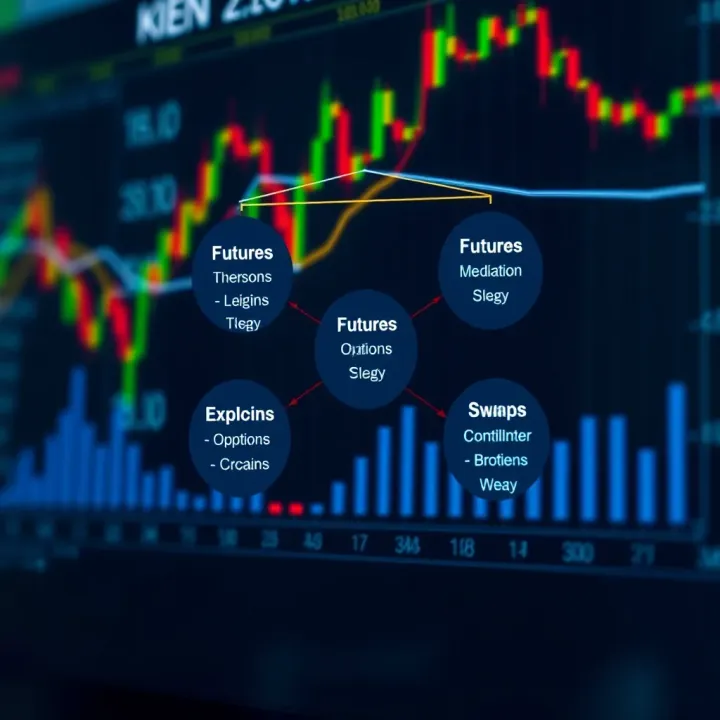
Understanding Derivative Trading in Kenya
Explore derivative trading in Kenya 📈. Learn types, risks, regulations, and strategies to confidently manage investments in local financial markets.
Edited By
Emily Foster
Forex trading has gained popularity among Kenyan traders keen to tap into global financial markets. However, the challenge often lies in accessing reliable, practical learning resources tailored to Kenya's trading environment. Forex trading PDFs offer an affordable and convenient way to understand this complex market, providing knowledge that you can study anytime, anywhere, even without constant internet access.
Forex trading involves buying and selling currencies in pairs, such as USD/KES, taking advantage of price movements to make profits. For Kenyan traders, understanding local factors like Central Bank of Kenya (CBK) policies, M-Pesa integration for deposits and withdrawals, and the working hours aligned with major forex centres is essential. PDFs focused on Forex trading often break down these elements in simple language with examples relevant to the Kenyan market.

Here's why using Forex trading PDFs makes sense for Kenyan traders:
Accessibility: You don't require continuous internet, which is helpful in areas with patchy connectivity.
Structured learning: Most PDFs are organised from beginner to advanced topics, giving you a clear path.
Cost-effective: Many reputable institutions or trading educators offer free or low-cost guides.
"Using Forex trading PDFs allows you to study at your pace, revisit tricky parts, and build strong foundational knowledge without pressure."
When selecting PDFs, focus on those that cover key trading concepts such as:
Currency pairs and how global events affect their pricing
Risk management strategies to protect your capital
Technical analysis tools like candlestick patterns and moving averages
The economic calendar and how Kenya's economic announcements influence the forex market
Furthermore, PDFs that include practical steps like opening trading accounts with Kenyan brokers, using M-Pesa for funding, and navigating trading platforms ensure the material fits the Kenyan context.
Finally, a good Forex trading PDF will not just dump information but offer actionable insights, helping you to simulate trades, monitor trends, and develop disciplined trading habits. Always check the source and aim for materials from respected Kenyan financial educators or international experts who tailor their lessons for local traders.
Taking time to study these resources thoroughly will increase your chances of making informed trading decisions and managing risks more effectively in the fast-moving forex market.
Grasping the basics of Forex trading is essential if you want to trade confidently and avoid costly mistakes. This section lays the groundwork, explaining what Forex trading is, how the market functions, and key terms you’ll encounter. Understanding these basics enables you to interpret Forex PDFs better and apply that knowledge in real trading situations.
Forex trading involves buying and selling currencies to profit from changes in their exchange rates. For example, you might buy US dollars with Kenyan shillings hoping the dollar will strengthen, then sell it later at a higher price. Unlike local trading, Forex runs globally, with currencies traded 24 hours daily on financial markets.
Currencies in Forex always come in pairs, like USD/KES (US dollar against Kenyan shilling). The first currency is the base, and the second is the counter. Quotations show how much of the counter currency you need to buy one unit of the base currency. For a practical example, if USD/KES is quoted at 110, it means one US dollar costs 110 Kenyan shillings.
The Forex market isn’t just for individual traders; it includes banks, corporations, central banks, hedge funds, and retail traders like you. Banks move huge sums to facilitate global trade, while central banks may intervene to stabilise their currencies. Understanding who moves the market helps traders time their trades better. So, when the Central Bank of Kenya adjusts policies or intervenes, currency movements can be quite sharp.
Forex trading happens around the clock, but certain sessions overlap for higher activity. Kenya, in East Africa Time (UTC+3), for instance, overlaps with the London session in the afternoon and the New York session into the evening. These overlap periods typically show more volatility and trading opportunities, so Kenyan traders often focus on these hours to benefit from stronger price moves.
A pip is the smallest price move in currency pairs, usually the fourth decimal place (0.0001). For example, if USD/KES moves from 110.0000 to 110.0001, that change is one pip. Lots are the size of a trade; a standard lot equals 100,000 units of the base currency. Smaller lots (mini, micro) are common for retail traders to manage risk.
Leverage lets you control a large Forex position with a small amount of capital. For example, with 1:100 leverage, you need KSh 1,000 to trade KSh 100,000 worth of currency. However, leverage increases both potential profit and losses. Margin is the money you deposit to open a leveraged trade, so understanding both is critical to avoid wiping out your account.

The bid price is the price buyers are willing to pay for a currency pair, while the ask price is what sellers want. The difference between them is the spread, which is how brokers earn their commission. For instance, if USD/KES bid is 110.20 and ask is 110.25, you would buy at 110.25 and sell at 110.20. Narrow spreads generally mean lower trading costs.
Mastering these basics equips Kenyan traders with the confidence to explore more advanced strategies and to make the most out of Forex trading PDFs.
Forex trading PDFs offer a practical way for Kenyan traders to deepen their understanding without needing constant internet access or expensive courses. These documents compile essential knowledge into a format you can load onto your device and consult whenever time allows, whether you're commuting on a matatu or during a break at work. This flexibility suits many learners balancing various responsibilities.
One major benefit of Forex trading PDFs is that you can access them offline. For Kenyan traders living in areas with unreliable internet or costly data bundles, PDFs allow uninterrupted study. You can download and save them on your smartphone, tablet, or laptop, then refer back whenever needed without worrying about losing connectivity. For example, a trader in Kisumu can review technical analysis strategies during a bus ride without using up precious data.
Forex PDFs usually present information in a clear, organized way, often broken into chapters, sections, and summaries. This arrangement helps learners progress step-by-step, starting from fundamentals through to advanced topics. You won’t find yourself lost in random blog posts but are guided through a logical flow. Some PDFs also feature charts, examples, and exercises that make understanding easier. For instance, a chapter on reading candlestick patterns might include both picture explanations and practical tips to spot trends in real time.
Most Forex PDFs focus heavily on teaching how to analyse the market both technically and fundamentally. Technical analysis covers reading charts, spotting patterns, and understanding indicators like moving averages or RSI (Relative Strength Index). Fundamental analysis explains how global news, economic indicators, or even local Nairobi political events can influence currency prices. For Kenyan traders aiming to catch the fluctuations between the US dollar and Kenyan shilling, grasping these tools is essential.
Proper risk management is a staple in Forex trading PDFs. They break down how to protect your capital by setting stop-loss orders, limiting exposure per trade, and avoiding overleverage. These strategies are especially important in Forex due to its volatile nature. For example, a PDF might advise never risking more than 2% of your trading account on a single position — a practical rule any Kenyan trader can apply.
Beyond charts and numbers, successful trading requires mental strength. PDFs often dedicate sections to trading psychology, helping you recognise emotional pitfalls like fear, greed, or impatience. Such knowledge encourages discipline, reminding traders to stick to their strategy instead of chasing quick profits. Kenyan traders in the hustle economy understand how losing patience can lead to rash decisions; learning to manage emotions can be a game changer.
Using Forex trading PDFs equips you with solid groundwork and practical insights tailored to the Kenyan trading context, helping you build confidence step by step without overwhelming costs.
By combining offline convenience, structured content, and coverage of critical topics, Forex trading PDFs remain valuable tools that Kenyan traders can integrate into their learning journey with ease and efficiency.
Using Forex trading PDFs effectively can significantly improve your understanding and performance in the market. These documents offer a convenient way to study at your own pace, but knowing how to choose and work through them makes all the difference. Whether you are just starting out or looking to sharpen your skills, applying clear steps can help you turn theory into practical knowledge.
Beginner guides are designed for those new to Forex trading. They cover the basic concepts such as what Forex is, how currency pairs work, and simple strategies. For example, a Kenyan trader just getting acquainted with Forex should look for PDFs that explain terms like pips, lots, and leverage plainly. These guides often include examples relevant to Kenyan currency pairs like USD/KES, making it easier to connect theory to local market conditions.
Intermediate resources build on foundational knowledge. They introduce deeper topics like technical analysis tools—moving averages, support and resistance levels—and fundamental analysis focusing on economic indicators. Traders at this stage might benefit from PDFs that show how to interpret Kenya’s economic reports or how global events affect the shilling. This helps bridge the gap between classroom concepts and real trading.
Advanced strategies suit those ready to tackle complex subjects such as algorithmic trading, advanced chart patterns, and risk management techniques including position sizing and stop-loss placements. PDFs for advanced users typically provide detailed case studies or scenarios, some even touching on African markets or cross-border trading in the East African Community, which can be particularly useful for Kenyan traders aiming to operate on larger scales.
Taking notes and summarising while reading helps retain key points and makes revisiting information easier. For instance, if you come across a new strategy in a PDF, jot down the steps and create a short summary in your own words. This active involvement turns passive reading into a learning session, reducing the chance of forgetting important tips.
Simulating trades using demo accounts allows you to apply what you learn without risking real money. Many Kenyan brokers like XM Kenya and HotForex offer demo accounts for this purpose. After studying a strategy in a PDF, try using the demo platform to practise entry and exit points. This hands-on approach builds confidence and helps you understand how strategies perform live under changing market conditions.
Referring to additional Kenyan market resources is important to keep your learning grounded. Websites like the Central Bank of Kenya publish economic data that can clarify fundamental analysis points mentioned in PDFs. Also, participating in Kenyan Forex communities on platforms like Telegram helps you get insights and clarify doubts about local market peculiarities.
Combining well-chosen PDFs with active note-taking, practical simulation, and local market engagement forms a strong foundation for successful Forex trading in Kenya.
Using these steps thoughtfully will ensure your time spent with Forex trading PDFs is not just theoretical but directly applicable to your trading goals.
Finding trustworthy Forex trading PDF sources is key to building solid knowledge and making informed decisions. In Kenya, where access to quality learning materials might be spotty at times, relying on credible PDFs reduces the chance of falling for gimmicks or outdated tactics. Trusted sources ensure you get practical advice tailored to real trading conditions, including how global currency moves affect the Kenyan shilling.
Educational websites with good reputation usually publish PDFs authored or reviewed by professionals with real market experience. Examples include established financial learning hubs or Forex institutions with a track record of helping traders succeed. These platforms often update their content regularly, reflecting recent market trends and tools. For instance, a Kenyan trader downloading a PDF from a site like BabyPips or Investopedia can expect clear explanations and examples relevant universally and adaptable locally.
Brokerage firms offering learning material are also solid sources. Reputable brokers operating in Kenya, such as FXPesa or ICEA Lion Securities, provide free educational PDFs to their clients. These materials tend to focus on actual trading platforms, local regulations, and market realities. Using PDFs from your brokerage means you learn using the same tools you’ll trade with, plus any special features they offer, like integration with Safaricom’s M-Pesa for deposits.
Checking author credentials helps filter out unreliable guides. A genuine author usually has verifiable experience in Forex markets, such as a professional trader, analyst, or economist. Beware of anonymous PDFs claiming easy money or guaranteed returns—these often come from unregulated sources. Confirming credentials may involve looking at LinkedIn profiles, published articles, or recognised certifications, ensuring the material is produced by someone who understands trading nuances.
Reading user reviews provides practical feedback on how well a PDF serves learners. Other traders often share their experiences about whether the material is accurate, easy to follow, and applicable for Kenyan contexts. Sites like Forex Peace Army and popular trading forums can reveal this information, helping you decide if a PDF adds value or is just fluff. Positive reviews with specific mentions of usefulness in real trading add confidence.
Cross-referencing with recognised Kenyan Forex communities like online groups or WhatsApp forums can further protect you. Members often discuss current learning tools and warn each other about misleading or poor-quality PDFs circulating in the market. Engaging with local traders gives insights into which documents are practical for Kenya’s trading environment. This community input helps you avoid wasting time on low-value resources and pick trusted guides that have been tried and tested locally.
Relying on solid Forex PDF sources from credible platforms or brokers, combined with community checks, sharpens your knowledge and arms you against scams. It’s a simple but powerful method that Kenyan traders should adopt regularly.
Forex trading carries inherent uncertainties that every trader should be aware of before diving in. Understanding these risks helps traders in Kenya guard their capital and make sensible decisions. Setting realistic expectations ensures you don’t fall into the trap of thinking Forex is a quick way to get rich but rather a skill to develop over time. This section breaks down the key risks and offers practical advice on how to approach your learning journey through Forex trading PDFs.
The Forex market is famously volatile, meaning currency prices can change rapidly within seconds or minutes. For instance, a political announcement from the Kenyan government or a shift in US Federal Reserve policies can cause sudden swings in currency pairs like USD/KES. This volatility can create both opportunities and dangers. While a sharp move might allow you to make a quick profit, it can easily swing against you if your position isn’t protected. Kenyan traders must monitor such news events carefully and use stop-loss orders to minimise potential losses.
Leverage lets traders control large amounts of currency with a relatively small deposit. For example, with 1:100 leverage, you could open a position worth KSh 100,000 using just KSh 1,000. While this magnifies potential gains, it equally increases losses. If the market moves just a little against you, the losses can wipe out your deposit quickly. Many Kenyan novice traders fall into overleveraging, thinking it’s an easy way to multiply profits, but it often leads to faster losses. It’s wise to use leverage conservatively and understand the margin requirements outlined in Forex trading PDFs.
Forex trading is not a sprint but more like a marathon where consistent learning and practice pay off. PDFs can teach you the rules and strategies, but mastering them takes time. Expect to spend weeks or months reading materials, practising with demo accounts, and reflecting on your mistakes. Patience is essential; rushing into live trading without adequate preparation often leads to losses. Keep reminding yourself that each loss is a learning step, not a failure.
PDFs provide crucial theoretical knowledge, but without applying it, the learning remains incomplete. Regularly practice what you read, especially using demo accounts offered by brokers to simulate real-market conditions without risking money. For example, if a PDF explains the Ichimoku Cloud indicator, try identifying its signals on a demo chart. Through this blend of theory and hands-on practice, your understanding deepens and your decision-making improves. Kenyan traders should balance reading Forex PDFs with active trading simulations to build both confidence and skills.
Successful Forex trading demands respecting market risks and steadily building competence. Using PDFs effectively is part of this responsible approach.
By grasping these risks and pacing your expectations, you'll better position yourself for Forex trading success in Kenya’s unique market conditions.
Explore derivative trading in Kenya 📈. Learn types, risks, regulations, and strategies to confidently manage investments in local financial markets.

Explore how to open a Deriv account in Kenya 🇰🇪, learn about funding options 💰, secure trading practices 🔒, and tips for navigating Deriv platforms efficiently.

📈 Learn how Kenyan investors can use copy trading to mirror experienced traders, understand benefits, risks, and get practical tips to trade wisely.

Explore D Trader's top features and benefits tailored for Kenyan traders 🇰🇪. Learn how to start, manage risks, and trade in multiple markets confidently 📈.
Based on 13 reviews