
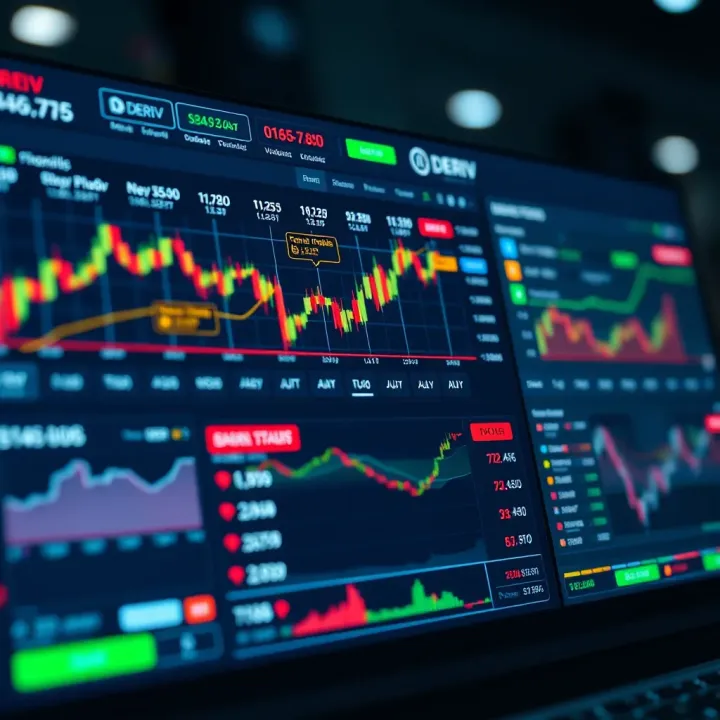
Using Deriv with TradingView for Smarter Trading
📈 Learn how Kenyan traders can combine Deriv with TradingView to boost strategies, follow easy integration steps, and improve trading results today!
Edited By
Amelia Davies
TradingView.com is a powerful tool for traders and investors across the globe, Kenyan market enthusiasts included. It offers an interactive platform for analysing stocks, forex, cryptocurrencies, and commodities through detailed charts. Rather than just looking at numbers, TradingView lets you visualise market trends, which brings life to your trading strategies.
One key strength of TradingView lies in its versatility. Whether you’re analysing the NSE stocks or global currency pairs involving the US dollar or euro, the charts help you spot patterns, entry points, and possible reversals. For instance, a trader monitoring Safaricom shares can customise the chart to view daily price movements, identify support and resistance levels, and apply indicators like the Relative Strength Index (RSI) to gauge momentum.
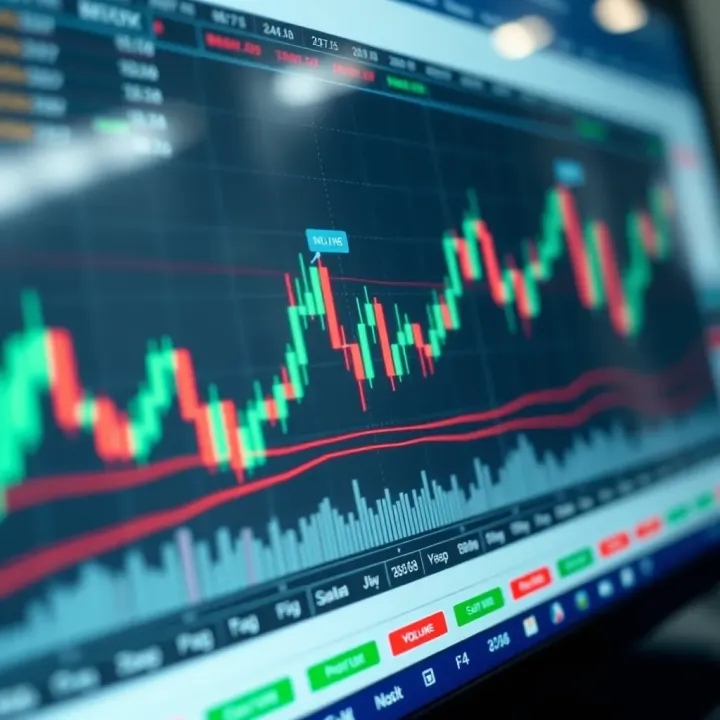
To make the most out of TradingView charts, it’s crucial to understand their main features and how to customise them to your needs. This approach ensures you’re not lost in a sea of data but focused on actionable insights.
Charts come in various types on TradingView:
Candlestick charts: The most popular choice for many Kenyan traders. They display open, high, low, and close prices in a colourful and informative way.
Line charts: These track closing prices and provide a simple overview of price direction.
Bar charts: Similar to candlesticks but with a different visual style.
Besides chart types, the platform offers numerous drawing tools such as trendlines, Fibonacci retracements, and horizontal lines to mark key price levels precisely. Furthermore, numerous technical indicators are available—these are mathematical calculations that help assess market strength and potential turning points.
In the next sections, we will break down how to navigate these features effectively, customise your workspace, and interpret market signals clearly. By understanding TradingView charts well, Kenyan traders can make informed decisions, reduce guesswork, and improve trading results.
When it comes to making smart trading decisions, understanding your tools is key. TradingView.com offers a powerful charting platform that brings market data to life, making it easier to spot trends and plan your next move. Whether you are tracking forex rates or following local stock listings, knowing how to navigate and customise charts on TradingView can sharpen your edge.
TradingView.com is an online financial platform that provides interactive charts and market data for traders and investors worldwide. It excels by combining real-time price updates, social networking features, and advanced charting tools all in one place. For Kenyan traders looking to analyse markets without the hassle of complex software installations, TradingView presents an accessible and responsive option.
The platform supports web and mobile access, which is quite handy for those on the go—say, checking Nairobi Securities Exchange (NSE) stocks during your commute or keeping an eye on forex pairs while away from your desk.
TradingView spans a wide range of markets, including stocks listed on the NSE, global equities, foreign exchange, commodities like petrol and gold, and cryptocurrencies such as Bitcoin and Ethereum. This variety means you can monitor multiple asset classes in one dashboard without switching between different websites or programmes.
As a practical example, a Kenyan trader might watch the performance of KCB shares alongside the USD/KES exchange rate on TradingView, giving a clearer picture of macroeconomic influences on their portfolio.
Charts are the bread and butter of market analysis because they visually represent price movements over time. Without charts, traders would rely on raw numbers alone, which can be overwhelming and lack context.
By studying charts, you can detect trends—like whether a stock is generally rising or falling. This insight helps in making decisions about when to buy or sell. For instance, an upward trend in Safaricom's stock price over several weeks might signal a promising entry point.
Charts also help track short-term price changes during live trading. When you notice a sudden spike or drop in M-Pesa’s mobile money transaction volumes reflected in related stocks, charts make it easier to respond quickly.
Using charts on TradingView, you can combine price history, volume data, and indicators in one place, making your market analysis more efficient and grounded in actual data.
In summary, getting familiar with TradingView.com and its charting tools lays a solid foundation for any trader or investor aiming to make informed, timely decisions in Kenya's dynamic financial markets.
Understanding the various chart types on TradingView is key for traders and investors to analyse markets effectively. Each chart style offers a different way to visualise price data, helping users spot trends, reversals, and market sentiment. Knowing when and how to use these charts can enhance your trading decisions, especially in volatile markets like forex or cryptocurrencies common in Kenya.
Basic price movement overview
Line charts plot a single point per period, usually the closing price, connected by straight lines. This gives a clean and simple overview of how an asset’s price moves over time. For example, if you are checking the general direction of Safaricom shares over several months, a line chart quickly shows whether the price is trending up or down without clutter.
When to use line charts
Line charts work best when you want a straightforward view of price trends without distractions. They are useful for beginners or investors focusing on long-term moves rather than daily fluctuations. However, if you look for detailed price action, such as intraday highs and lows, line charts might leave out important information.
Understanding candlesticks and their patterns
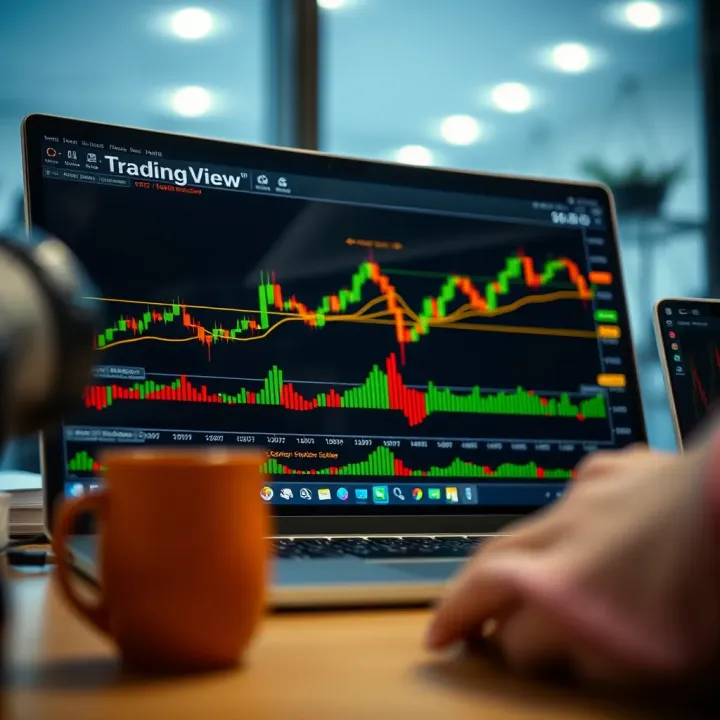
Candlestick charts display four prices per period: open, close, high, and low, forming a body and wicks (shadows). The colour and size of the candlestick help reveal market sentiment within that timeframe. For instance, a green (or white) candlestick means the price closed higher than it opened, signalling buying pressure.
Common candlestick formations to watch
Certain patterns give clues about possible price moves. The "hammer" suggests a potential reversal after price drops, while the "doji" indicates indecision among traders. Kenyan traders using M-Pesa stocks might observe these patterns to decide when to enter or exit the market before bigger news releases.
Differences between bar and candlestick charts
Bar charts also show open, close, high, and low prices but represent it differently—with vertical lines indicating price range, and horizontal ticks for open and close. While similar to candlesticks, bar charts look less visual and are preferred by some traders who want a minimalist but detailed price view.
Less common chart types: Renko, Heikin Ashi
Renko charts filter out noise by focusing only on price movement, ignoring time. This helps highlight clear trends without small fluctuations, useful in choppy markets like forex. Heikin Ashi smooths candlestick data to reveal trend direction better and can reduce false signals. Both types might be less known but can add value for Kenyan traders seeking alternatives beyond traditional charts.
Mastering these chart types on TradingView equips you to pick the right tool for analysis, whether you want simplicity or detailed price action. Each style fits different strategies and market conditions.
Line charts: simple, best for trend direction
Candlestick charts: detailed, pattern-rich, widely used
Bar charts: minimal but precise price data
Renko and Heikin Ashi: noise reduction for clearer trends
Using these charts strategically can sharpen your market insights and improve timing for trades or investments in Kenya’s fast-growing markets.
Customising and navigating charts on TradingView is essential for traders and investors who want to analyse markets efficiently. Tailoring chart views to your trading style helps capture meaningful patterns and make timely decisions. Rather than using default settings, adjusting timeframes, zoom levels, and annotations allows you to focus on the price action that matters most to your strategy.
Choosing the right timeframe is key to understanding market movements. For instance, selecting an hourly chart works well for day traders who want to catch quick price swings during market hours. On the other hand, a daily or weekly chart suits investors looking at longer trends, helping avoid noise from short-term volatility. Kenyan traders dealing with volatile forex pairs or cryptocurrencies often switch between different timeframes to spot both entry points and exit signals.
Zooming and scrolling through charts lets you examine price history closely or get a broader market perspective. You might zoom in to study a recent price breakout in detail, identifying the exact candle that triggered a reversal. Scrolling backward in time helps understand how current price levels relate to previous support or resistance zones. TradingView’s intuitive zoom and scroll make this seamless, so you don’t miss crucial clues buried in past data.
Drawing trendlines, support, and resistance levels directly on charts provides visual guides for decision-making. Trendlines connect swing highs or lows, revealing the general direction of price movement. For example, if a stock listed on the NSE is consistently bouncing off a rising trendline, it indicates strong buyer interest at those levels. Marking horizontal support and resistance helps pinpoint zones where price has repeatedly stalled, guiding where to set stop-loss orders or target profits.
Besides lines, shapes and text annotations clarify your analysis by highlighting specific patterns or notes. You might draw rectangles around consolidation zones or add text reminders like "Watch for breakout here". This is particularly useful if you revisit charts after some time or share them with fellow traders. Visual markers help keep your strategy organised and make complex chart information easier to interpret quickly.
Effectively customising your TradingView charts combines clear visuals and appropriate time settings, enabling you to grasp market trends and make smarter trading calls. Kenya’s fast-paced markets require such adaptable tools to stay ahead.
Custom settings and drawing tools are not just about aesthetics but practical aids that improve your analysis accuracy and trading confidence.
Technical indicators play a key role in making sense of raw price data on TradingView charts. They help traders identify trends, momentum, and potential reversal points without guessing. For Kenyan traders, these tools provide practical insights that support decisions whether trading stocks listed on the Nairobi Securities Exchange (NSE), forex pairs, or cryptocurrencies like Bitcoin.
Moving averages smooth out price fluctuations over a chosen period, revealing the general market direction. For example, a 50-day moving average tracks medium-term trends, helping traders spot whether a stock or currency is generally rising or falling. This simplicity makes them ideal for new and seasoned traders alike. The Relative Strength Index (RSI) complements this by measuring the speed and change of price movements on a scale of zero to 100. RSI signals when an asset is overbought (above 70) or oversold (below 30). For instance, if Safaricom Ltd’s stock RSI crosses above 70, it may hint at a possible pullback soon.
The Moving Average Convergence Divergence (MACD) indicator combines two moving averages to show momentum shifts. When the MACD line crosses above the signal line, it often suggests a buy signal; crossing below hints at selling opportunities. It’s especially useful in choppy market conditions often seen in forex trading. Bollinger Bands, on the other hand, plot a moving average with upper and lower bands that expand or contract based on volatility. When price hits the lower band, it might mean a bounce back is due; reaching the upper band can signal a peak. Kenyan traders can use this on currency pairs like USD/KES to watch for volatility bursts and potential entries.
Adjusting indicator settings is necessary as no single one fits all strategies. For example, day traders might prefer a faster 14-day RSI over a 30-day to capture quicker market moves. Similarly, altering moving average periods from 50 to 20 days can help capture short-term swings better. This flexibility lets traders tailor tools to their specific market conditions and risk appetite, for example, whether you’re trading NSE stocks or short-term forex scalps.
Relying on one indicator can lead to false signals, so Kenyan traders often use multiple indicators to confirm their analysis. For instance, a buy signal might be stronger if both the MACD crossover and RSI oversold condition happen together. Likewise, a price near the lower Bollinger Band paired with a positive MACD crossover can reinforce entry confidence. This approach reduces guesswork and helps manage risk by waiting for several indicators to agree before making a move.
Using technical indicators properly requires practice but improves your chances of making informed trades. Adjusting parameters and combining signals tailor your strategy to local markets and your personal style on TradingView charts.
By mastering these indicators and customising them as described, you gain sharper tools to spot trends and timing, essential for the fast-moving Kenyan trading environment.
Interpreting chart data correctly is the backbone of smart trading. It enables you to understand market movements and make decisions that align with your risk appetite and goals. Without solid interpretation skills, you might end up chasing prices blindly or exiting trades prematurely. This section focuses on how to read key chart elements like price action, volume, and signals, which are vital for making informed choices on TradingView.
Recognising trends and reversals is fundamental in trading. Trends show the general direction of prices, whether upwards (bullish), downwards (bearish), or sideways (consolidation). For example, in the Nairobi Securities Exchange (NSE), a consistent rise in Safaricom’s stock price over several days often signals a strong bullish trend. Spotting trend reversals early — when buying pressure shifts to selling pressure — can save you from losses. A sharp drop in price after a long upward move might be a reversal warning, signalling the moment to exit or prepare for different trade setups.
Volume as a confirmation tool adds weight to price movement analysis. High volume during an uptrend suggests strong buying interest and increases the likelihood that the trend will continue. On the other hand, if prices rise with low volume, the move might lack conviction and could reverse quickly. For instance, if Kenya Power’s shares jump but with low trading volume, it may not be sustainable. Using volume helps you avoid false signals and identify moments when institutional investors are active, a crucial insight for traders.
Setting stop-loss and take-profit levels practically protects your capital and locks in gains. A stop-loss placed just below a recent support level limits the damage if the trade goes against you, while a take-profit target near a known resistance level ensures you don’t give back profits. For example, when trading forex pairs like USD/KES, setting a tight stop-loss of about 20 pips after confirming support can prevent large drawdowns. These levels also help you stick to your trading plan and avoid emotional decisions.
Using chart signals with trading plans means aligning patterns, indicators, and personal rules before acting. If a chart shows a bullish engulfing candlestick pattern combined with a rising Relative Strength Index (RSI), it might confirm an entry point. However, you should consider your overall plan, including risk tolerance and time horizon, before making the trade. A well-structured plan prevents overtrading and ensures every entry or exit is backed by consistent criteria.
Successful trading on TradingView depends not just on spotting patterns but on interpreting price and volume data in line with your strategy. This approach gives you clarity and control in the often unpredictable markets.
Use these steps consistently as you build confidence in reading charts — your decisions will become sharper, reducing guesswork and improving results.
Using TradingView charts efficiently can really sharpen your trading skills and help you stay on top of market movements. While the platform offers a wealth of tools, mastering a few key features like saving chart layouts and setting alerts can save you a lot of time and missed opportunities. Plus, tapping into the TradingView community can give you fresh perspectives and trading ideas that align with Kenyan market realities.
Saving personalised chart layouts is a neat way to keep your favourite setups ready without rebuilding them from scratch each time you log in. For example, if you regularly monitor the NSE 20 share index alongside the USD/KES forex pair, you can save both chart views with your preferred indicators and timeframes. This setup allows you to jump straight into analysis without wasting minutes every morning.
TradingView lets you save multiple layouts, which helps if you have different strategies depending on day trading or longer-term investing. Practically, this means when you switch from short-term charts to weekly views, you don’t lose your drawn trendlines or indicator settings. It maximises your workflow and keeps distractions like re-arranging charts away from crucial moments in the market.
Setting alerts for price changes or indicator signals on TradingView can be a game-saver, especially given the fast pace of trading. Rather than constantly watching the charts, you can program alerts for key levels—for instance, when Safaricom’s stock hits KSh 40 or when the RSI shows overbought conditions. The platform notifies you instantly via push notifications or emails.
Alerts help prevent missing trades in Nairobi’s busy rush hours or when you are away from your screen. Moreover, they enable disciplined trading by sticking to predefined entry or exit points. Say you use Bollinger Bands for volatility; you can set alerts when prices break out above or below the bands, giving you timely signals supported by data.
TradingView’s community is a valuable resource, especially if you follow experienced traders who share detailed analysis and trade ideas. Kenyan traders can gain insight by observing how professionals interpret chart patterns on the NSE, forex, or cryptocurrencies. Following these traders helps you understand market psychology and introduces you to strategies that have worked in real conditions.
Additionally, you don’t have to go it alone. Participating in discussions around published ideas allows you to ask questions, share viewpoints, and refine your analysis. For example, joining a conversation about Safaricom’s price action or KCB Group’s quarterly earnings can deepen your understanding beyond the numbers and charts.
Being active in comments also exposes you to alternative interpretations, which is helpful because market behaviour rarely follows a straight line. It encourages critical thinking rather than blind copying of strategies. For Kenyan traders, this interactive environment creates a supportive community that enhances skills and confidence.
Taking advantage of saved layouts, setting alerts, and engaging with the TradingView community can turn theoretical knowledge into actionable trading decisions. These simple steps boost readiness and help adapt to rapid market changes, especially in the dynamic Kenyan trading scene.
📈 Learn how Kenyan traders can combine Deriv with TradingView to boost strategies, follow easy integration steps, and improve trading results today!
📈 Learn how to use TradingView.com for market analysis with easy-to-follow steps. Master charts, indicators & social tools to boost your trading decisions in Kenya.
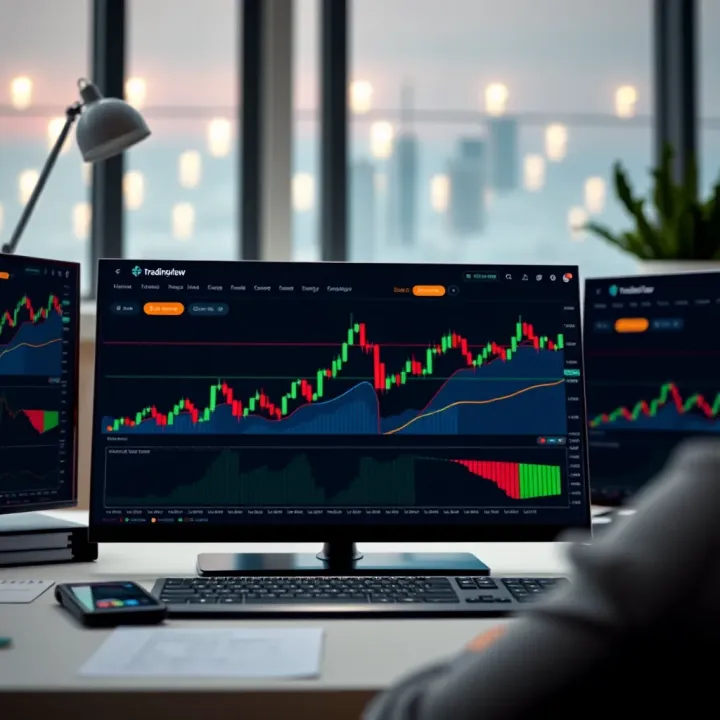
📈 Discover how traders in Kenya can boost their binary options trading with TradingView tools. Learn tips, avoid pitfalls, and make smarter trades today!
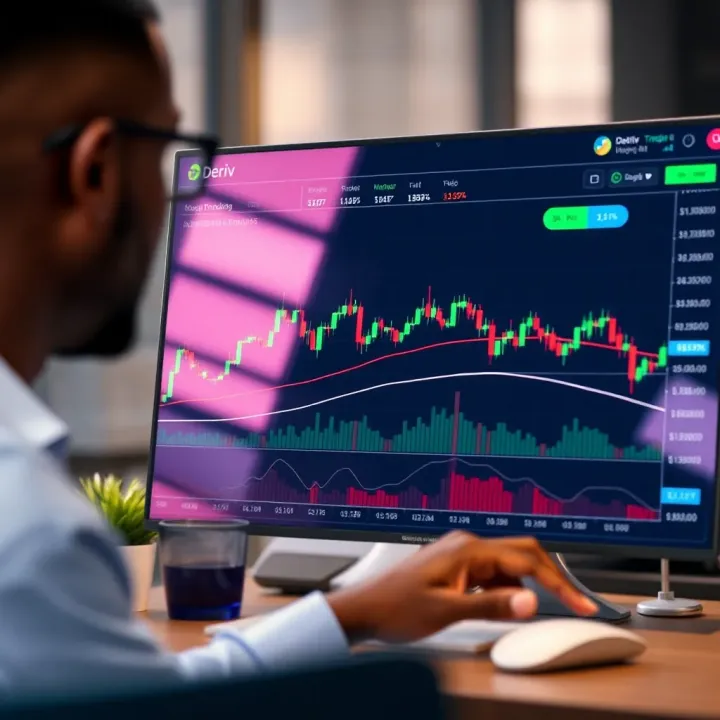
📈 Learn to master Deriv TradingView for smarter trades in Kenya! Set up charts, use tools, apply strategies, and avoid common trading mistakes.
Based on 5 reviews