
USD to INR Exchange Rate Forecast and Trends
📈 Explore the USD to INR forecast with key trends, economic factors, and expert outlooks to guide your currency exchange decisions between the US and India.
Edited By
Emily Dawson
Understanding the USD to Kenyan Shilling (KES) exchange rate is vital for traders, investors, and entrepreneurs operating in or with Kenya. Fluctuations in this rate impact the cost of imports and exports, inflation levels, and the overall business climate. For example, when the US Dollar strengthens against the shilling, the price of imported goods like electronics or fuel often rises, squeezing both consumers and businesses.
Kenya’s reliance on foreign exchange from exports such as tea, coffee, and horticultural products means the KES’s value closely follows global market shifts. At the same time, remittances from Kenyans overseas and foreign investments bring in USD, supporting the shilling. Changes in US economic policies or geopolitical tension can push the dollar’s value, which in turn affects the Kenyan economy.
Keep in mind that the foreign exchange market is affected by many moving parts, including interest rate changes by the US Federal Reserve, Kenya’s trade balance, and even local political stability.
For Kenyan businesses, predicting currency trends helps with budgeting and pricing strategies. Investors use forecasts to hedge risks or take advantage of potential gains. When the shilling shows signs of weakening, companies relying on foreign imports might secure contracts early or use forward contracts to lock in better rates.
To navigate these uncertainties:
Watch Central Bank of Kenya (CBK) announcements on monetary policy
Follow global economic events tied to the US Dollar
Consider historical exchange rate trends over recent years
Use currency hedging instruments when possible
This article will break down key factors that influence the USD to KES exchange rate, track historical patterns, and offer practical advice to help you manage the risks and opportunities tied to currency fluctuations. Staying informed clears the fog, enabling better financial decisions in Kenya’s dynamic market environment.
Understanding the current state of the USD to KES (Kenyan Shilling) exchange rate is fundamental for anyone involved in Kenyan trade, investment, or financial planning. The exchange rate impacts everything from the cost of importing goods, the value of remittances, to investor sentiment and government debt servicing. Having a clear snapshot helps businesses, traders, and investors make informed decisions and guard against unexpected market moves.
Lately, the Kenyan Shilling has shown mixed performance against the US Dollar. After a period of relative stability around KS10 to KS12 per USD, recent months witnessed a gradual weakening, with rates hovering near KS15. This shift partly reflects seasonal trends, such as increased demand for imports ahead of the festive season combined with foreign exchange reserves tightening slightly in the Central Bank of Kenya (CBK).
For instance, Kenyan exporters received fewer dollar inflows recently, affecting dollar availability. At the same time, higher global oil prices have increased import bills, creating additional demand for the dollar. Such conditions tend to push the local currency down because more shillings are needed to buy the same USD amount. However, these fluctuations remain within a relatively narrow range compared to past years, indicating some resilience.
Several key factors influence the current USD to KES rate. First, Kenya’s trade balance plays a major role. With imports often exceeding exports, demand for foreign currency surpasses supply, putting downward pressure on the shilling. For example, Kenya imports machinery, fuel, and vehicles mostly paid in dollars, while exports like tea, coffee, and horticulture generate dollar inflows but sometimes not enough to balance the books.
Secondly, the monetary policies of both Kenya and the United States shape forex movements. The US Federal Reserve's interest rate decisions directly affect the dollar’s strength globally. When the Fed hikes rates, the dollar tends to appreciate, influencing KES negatively. Meanwhile, CBK's interventions, such as selling forex from reserves or adjusting local interest rates, aim to stabilise the shilling and manage inflation.
Third, external factors like geopolitical tensions and global commodity price shifts can quickly alter investor confidence and capital flows. For example, sudden spikes in oil prices due to conflicts can widen Kenya’s import costs and demand more dollars.
Keeping an eye on these factors equips traders and investors with the practical awareness needed to anticipate exchange rate movements and manage currency risks effectively.
In summary, the current USD to KES exchange rate is the result of a complex interplay between domestic economic conditions, policy decisions, and global market forces. Staying updated on these allows stakeholders to navigate currency fluctuations with better confidence and strategy.
Understanding the drivers behind the USD to KES exchange rate is essential for traders, investors, and entrepreneurs navigating Kenya’s financial landscape. Exchange rate fluctuations reflect a blend of domestic economic conditions and external pressures. This section highlights Kenya's key economic indicators and policies alongside global influences that often dictate the Shilling's strength against the US Dollar.
Inflation directly affects the Kenyan Shilling’s purchasing power and investor confidence. When inflation is high, the Shilling tends to weaken as the cost of goods rises and demand for foreign currency grows. For example, in periods where inflation breached double digits in Kenya, import costs surged, pushing businesses to seek more dollars to cover expenses.
Interest rates set by the Central Bank of Kenya (CBK) offer a counterbalance. Higher rates attract foreign investment seeking better returns, strengthening the Shilling. Conversely, lower rates may discourage capital inflows, leading to depreciation. Recently, when CBK raised the Central Bank Rate to control inflation, there was noticeable short-term support for the Shilling.
Kenya’s trade balance—the difference between exports and imports—plays a crucial role in currency movement. A persistent deficit, where imports exceed exports, means increasing demand for foreign currency, often weakening the Shilling. For instance, Kenya imports oil, machinery, and electronics mainly paid in US dollars, creating consistent pressure on the USD to KES rate.
The current account, which also considers income from abroad and remittances, can offset trade deficits. Significant remittance inflows from Kenyans abroad, mostly in USD, help support the Shilling. However, if exports falter or imports surge, the imbalance worsens, causing currency volatility.
Government spending and borrowing influence the Shilling's trajectory. Large budget deficits funded by borrowing can heighten inflation expectations, reducing currency value. Kenya’s recent budget periods that expanded public expenditure without matching revenue raised concerns among forex traders.
Monetary policy decisions, including money supply control and intervention in forex markets, also steer the exchange rate. CBK’s occasional sales of US dollars to stabilise the Shilling reflect active efforts to dampen volatility. Businesses and investors watch these policies closely as signals of future currency trends.
The US Federal Reserve’s (Fed) interest rate policies have a direct impact on USD demand globally. When the Fed hikes rates, US assets become more attractive, strengthening the USD against currencies like the Kenyan Shilling. For example, during recent Fed tightening cycles, many emerging market currencies including KES faced depreciation due to capital flight.
Changes in Fed outlook also affect forex markets. If investors expect further tightening, the Shilling may weaken in anticipation, even before actual moves happen. Hence, market participants in Kenya monitor Fed statements as a key external indicator.
Kenya’s dependence on imports for oil and some raw materials makes global commodity prices very relevant. Rising oil prices increase Kenya’s import bill, forcing demand for USD and putting pressure on the Shilling. On the other hand, prices of export commodities like tea and coffee influence foreign exchange earnings. A slump in these prices can reduce forex inflows, weakening the KES.
For example, spikes in global oil prices have coincided with sharp Shilling depreciations in past years, increasing fuel costs and transport fares, which ripple through the economy.
Uncertainty from geopolitical tensions—such as conflicts, trade wars, or sanctions—tends to boost demand for the USD as a safe haven. This generally weakens the Kenyan Shilling alongside many other emerging market currencies.
For instance, instability in key trading partners or sudden policy shifts can disrupt trade flows and investor confidence. Regional security issues or global crises may also trigger capital flight from Kenya, causing abrupt downturns in the KES. Staying alert to geopolitical headlines helps businesses and investors anticipate potential shocks in currency markets.
Exchange rates reflect a blend of local economic realities and global forces. Understanding these factors allows market players to better prepare for currency shifts impacting trade, investment, and daily costs.
By keeping an eye on these key economic indicators and global events, you can navigate the USD to KES exchange rate with clearer insight and sharper timing.
Understanding historical exchange rate patterns between the US Dollar (USD) and Kenyan Shilling (KES) provides valuable context for anticipating future currency movements. Traders, investors, and business owners can avoid costly surprises by recognising how past behaviour reacts to domestic and global shifts. This knowledge offers practical tools for managing risk and planning financial strategies.
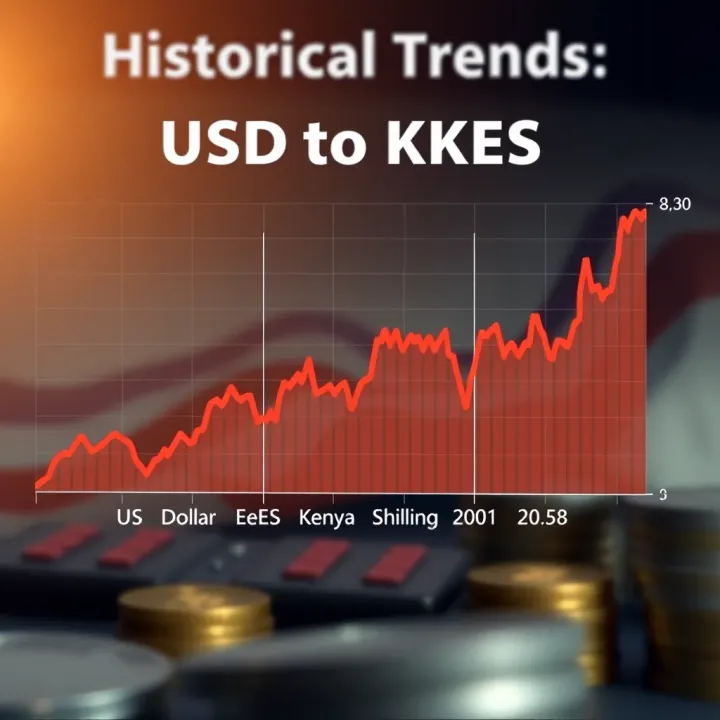
Over the past ten years, the USD to KES rate has generally trended towards depreciation of the shilling against the dollar. For instance, around 2014, the exchange rate hovered near KSh 85 per USD but has since weakened to roughly KSh 124 in early 2024. This decline reflects Kenya's persistent inflation differentials, trade deficits, and dollar demand from imports and debt servicing.
Yet, even within this broad decline, there have been fluctuations influenced by short-term factors like political events, monetary policy adjustments, and external shocks. The 2017 election period witnessed a notable dip in the shilling’s value as investor confidence wavered, before stabilising after a peaceful transition. Such volatility points to the delicate balance in currency markets where sentiment often drives sharp shifts.
Global slowdowns, like during the 2020 COVID-19 pandemic, typically cause the KES to weaken. As remittances fell and export demand shrank, Kenya faced less foreign currency inflow, pushing up USD demand. Moreover, international investors pulled back from emerging markets, limiting capital inflows to Kenya. These external pressures remind traders and policy makers that Kenya’s currency is vulnerable to global economic health.
Kenya’s political landscape has a marked effect on the shilling’s strength. Election years, especially when disputes arise, often trigger uncertainty among investors and forex traders. For example, the 2007 post-election violence led to sharp depreciation, causing import costs to spike, affecting inflation and business operations nationwide. More recent elections have seen improved stability, but political risk still shapes market behaviour significantly.
Kenya imports most of its petroleum products, making the shilling sensitive to oil price movements. When oil prices rise sharply, Kenya needs more dollars to pay for fuel, increasing demand for USD and pressuring the KES downward. The 2018 oil price surge coincided with shilling depreciation, driving up transportation and goods costs. Businesses reliant on fuel costs must therefore track global oil trends closely as these directly affect their operating expenses and pricing.
Historical exchange rate analysis isn’t just about numbers — it’s about understanding the interplay between Kenya’s economy, politics, and the wider global environment. Learning from these events helps you anticipate challenges and spot opportunities in the USD to KES market.
By keeping these patterns and lessons in mind, traders and investors can better manage currency risk, while businesses can plan budgets and pricing to cushion against forex shocks. Moreover, policy makers can design interventions that stabilise the shilling and support economic growth amid fluctuating external conditions.
Understanding the forecast for the USD to Kenyan Shilling (KES) exchange rate has real consequences for Kenya’s economy. For businesses, investors, and consumers alike, knowing what to expect helps in planning and decision-making. From adjusting import costs to pricing exports competitively, the exchange rate weighs heavily on everyday activities.
Fluctuations in USD to KES directly influence Kenyan companies, especially those operating in import and export markets. A weakening shilling makes imported goods and raw materials costlier, putting pressure on manufacturers who rely on foreign inputs. For instance, a local textile factory importing fabric will face higher costs if the shilling drops, which can reduce profit margins or lead to price hikes.
Conversely, exporters benefit from a weaker KES because their products become cheaper for buyers paying in dollars. Kenyan tea and coffee farmers could see increased revenue when the shilling softens, promoting greater foreign demand. However, volatility in the exchange rate complicates contracts and long-term planning, so businesses may need to factor in potential exchange rate risks.
Importers struggle when the shilling weakens since they must pay more KES to buy the same amount of foreign currency. This can delay procurement or force passing the cost to consumers. For example, retailers importing electronics or fuel might raise prices, affecting affordability.
Exporters enjoy the opposite advantage, but they still face uncertainty with fluctuating rates. Managing cash flow and setting competitive export prices becomes tricky without stable currency forecasts.
Consumers feel the pinch when imported goods like medicines, electronics, or petrol become expensive due to exchange rate shifts. This can restrict consumer spending on non-essential items and increase the cost of living.
Sharp USD to KES swings often ripple through Kenya’s supply chains, forcing adjustments at multiple levels — from factories to shop shelves.
Currency weakness often pushes inflation higher since import prices rise, raising overall prices in the economy. This means everyday essentials such as cooking oil, sugar, and fuel may cost more. Kenyan families might have to tighten budgets, prioritising basic needs over other expenses.
Inflation driven by exchange rate changes can also affect interest rates set by the Central Bank of Kenya, as it tries to manage price stability. Higher borrowing costs from increased interest rates can slow down business expansion and consumer loans.
On the flip side, a strong shilling reduces inflationary pressures but may hinder exporters by making goods costlier abroad, affecting earnings in foreign currency.
In summary, the USD to KES forecast is not just a number for financial analysts; it touches the lives of businesses and households. Keeping an eye on these implications helps stakeholders prepare better, whether it’s by adjusting budgets, revising contracts, or managing investment risks.
Managing currency risks is a must for anyone dealing with USD to KES transactions, whether you're a trader, investor, or business owner. The Kenyan Shilling can be quite volatile, influenced by both domestic policies and global events. Practical strategies help manage that unpredictability, preventing surprises that could hurt your bottom line or investment returns.
Importers and exporters regularly face currency exchange risks because payments and receipts often happen at different times. For example, a Kenyan importer who agrees to pay a US supplier next month risks the shilling weakening, which would make the payment costlier in KSh. To manage this, you could lock in an exchange rate by using forward contracts or opt to invoice in Kenyan Shillings to shift the risk.
Exporters should watch for currency trends carefully. If you expect the USD to strengthen against the KES, pricing your products competitively in foreign markets may require adjusting your rates or securing payments sooner. Maintaining good communication with your bank or forex service provider ensures you can act quickly when rates shift.
Increasingly, businesses also monitor political developments and CBK (Central Bank of Kenya) policy changes because these can drastically affect exchange rates. Keeping an eye on these factors helps plan better and stabilise cash flows.
Forward contracts let you agree today on an exchange rate for a transaction happening in the future. This approach shields you from sudden shilling depreciation. For example, if you're importing stock in three months, a forward contract ensures you won't pay more even if the USD gains ground against the KES. Banks like KCB and Equity Bank offer these products tailored to Kenyan businesses and individuals.
Hedging isn't just for big firms; savvy investors can also use currency futures or options to protect their foreign investments from exchange rate swings. While these tools might seem complex, financial advisors or brokers familiar with the Nairobi Securities Exchange (NSE) can guide you on appropriate hedging strategies.
To reduce currency risk, spread your investments across different asset classes and currencies. Don't keep all your money tied to USD-denominated assets or local KSh investments alone. For instance, mixing shares from NSE-listed companies, US stocks, and bonds denominated in other currencies can soften the blow if the shilling weakens unexpectedly.
Diversification also means considering alternative vehicles like property or commodities, which might not correlate closely with currency movements. This balance helps preserve your capital even when exchange rates fluctuate.
In essence, managing currency risk requires understanding available financial tools and making informed choices aligned with your risk appetite and business cycles. By planning ahead, you avoid costly surprises and maintain stability despite the ever-changing USD to KES landscape.
📈 Explore the USD to INR forecast with key trends, economic factors, and expert outlooks to guide your currency exchange decisions between the US and India.

🔍 Stay ahead with a detailed AUD to USD forecast! Learn how economy, politics, and central banks impact the Aussie and US dollars exchange rates. 💹

📊 Get precise GBP/USD forecasts analysing key economic indicators, Brexit effects, US Fed moves, and market trends. Practical insights for trading and investment decisions.

🔄 Learn how to swap money safely using M-Pesa and other methods. Understand exchange rates, avoid common risks, and save when trading currencies in East Africa.
Based on 7 reviews