
London Forex Session Timing for Kenyan Traders
📈 Discover London forex session timings in Kenya, learn about peak trading hours, session overlaps, and tips to maximise your forex trades effectively from Nairobi and beyond.
Edited By
Ethan Chambers
The New York forex session is one of the key trading periods for currency markets globally. For Kenyan traders, understanding its timing and market behaviour is essential for effective forex trading strategies. The session typically runs from 8:00 am to 5:00 pm Eastern Standard Time (EST), which translates to 4:00 pm to 1:00 am Kenyan East Africa Time (EAT). This timing allows Kenyan traders to actively participate in the market during late afternoon and evening hours.
During this session, the New York market often overlaps with the London forex session from 4:00 pm to 6:00 pm EAT. This two-hour overlap is crucial as it tends to generate higher trading volumes and increased price volatility. Kenyan traders can leverage these conditions to find better trade entries and exits.
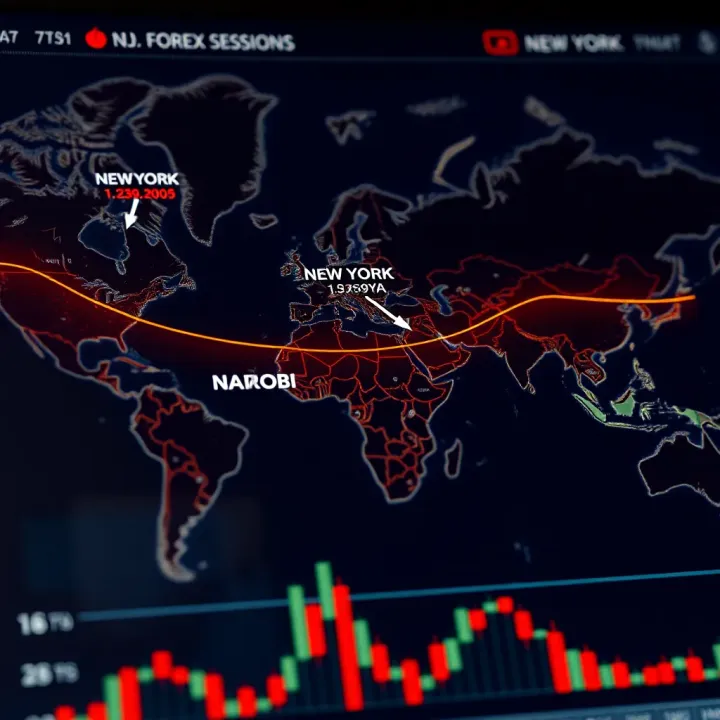
The overlap between New York and London sessions marks the most liquid and active forex trading window daily, offering more opportunities for profit but also requiring careful risk management.
Some practical points for Kenyan traders to consider:
Trading volumes peak: Currency pairs involving the US dollar (USD), British pound (GBP), and euro (EUR) experience heightened activity.
Market news releases from the US: Economic reports, Federal Reserve decisions, and political events often influence price action significantly during this session.
Market closes late for Kenyan traders: The session ends at 1:00 am EAT, so planning trades carefully and avoiding overtrading late at night helps maintain discipline.
In summary, the New York forex session offers a vital window for Kenyan forex investors to engage with global currency markets. Its timing aligns well with Kenyan evening hours, while the dynamic overlap with London ensures liquid conditions. Knowing when this session opens and closes, alongside its impact on major currency pairs, can help traders optimise their strategies and manage risks effectively.
Understanding the New York forex session is essential for traders, especially those based in Kenya, as it accounts for a significant portion of daily market activity. This session not only influences global currency movements but also offers Kenya-based traders unique trading opportunities due to its timing and the dominance of the US dollar in forex transactions.
The New York forex session officially runs from 8:00 am to 5:00 pm Eastern Time (ET). These hours coincide with the active business day in the American financial markets. For example, many bankers, financial institutions, and hedge funds operate within this window, leading to peak trading volumes. Traders in New York can expect the heaviest price action and liquidity during these hours.
Compared to other major trading sessions like Tokyo or London, the New York session is often marked by high volatility, especially in US dollar pairs such as USD/KES, USD/EUR, and USD/GBP. It also overlaps with the London session for a few hours, enhancing liquidity and often amplifying price swings. Unlike the Tokyo session, which tends to be quieter, New York offers more active and fast-moving market conditions.
New York is typically 8 hours behind Nairobi. While Nairobi operates on East Africa Time (EAT, UTC+3), New York is on Eastern Standard Time (EST, UTC-5) or Eastern Daylight Time (EDT, UTC-4) depending on the time of year. This time difference affects when Kenyan traders can actively participate during the New York session.
Translating the session hours to Kenyan time means the New York trading window usually runs from 3:00 pm to midnight EAT during Eastern Standard Time. When New York switches to daylight saving time, this changes to 2:00 pm to 11:00 pm EAT. For Kenyan traders who may be juggling day jobs, these times often fit well with late afternoon and evening trading.
Daylight saving time in New York starts on the second Sunday of March and ends on the first Sunday of November. During this period, New York moves an hour ahead, reducing the time difference to 7 hours. Kenyan traders should adjust their trading schedules accordingly to avoid missing key market openings or news releases. For example, trading the USD/KES pair at 3:30 pm in July will correspond to a different New York market time compared to in January.

Aligning your trading times with the New York session ensures you can take full advantage of peak liquidity and price movements, especially for USD-related pairs that dominate the forex market.
This overview highlights the critical details about the New York session's timings and characteristics, helping Kenyan traders plan more precise trading strategies around the session's dynamics.
Market activity during the New York forex session plays a significant role in shaping trading dynamics globally. This session, active from about 8:00 am to 5:00 pm New York local time, often sees large trading volumes, especially in pairs involving the US dollar. Kenyan traders should pay attention to these volumes because the movements here can bring about strong price swings and opportunities for profit.
The New York session is known for driving significant liquidity into the forex market. Major currency pairs like USD/KES, EUR/USD, and GBP/USD see increased trading volumes during this time. This happens because New York hosts many financial institutions, hedge funds, and corporate traders who move large amounts daily. These players can cause sudden and sharp price fluctuations, so Kenyan traders need to be ready to respond to fast market actions.
Periods of high volatility usually occur during the opening hours of the New York session and around major US economic announcements, like the Federal Reserve interest rate decisions or employment reports. For example, at 3:30 pm EAT, when US non-farm payrolls (NFP) are released, markets can swing violently in a matter of minutes. Conversely, volatility tends to drop after lunch time in New York as traders await the close, leading to calmer markets that may require a different trading approach.
One of the key features of the New York session is its overlap with the London session, which runs from about 3:00 pm to 12:00 am EAT. This overlap, roughly from 3:00 pm to 5:00 pm EAT, is often the most active trading window of the day. Because both London and New York are major financial centres, the combined volumes lead to enhanced market participation and stronger price moves.
The overlap period improves market liquidity, meaning there are more buyers and sellers at any given point, allowing orders to be filled quickly and at better prices. High liquidity makes it easier for Kenyan traders to enter or exit positions without causing significant price shifts. However, it also means price movements can be faster and less predictable, requiring quick decision-making.
The New York session’s influence is felt worldwide, with its timing shaping when and how traders, including those in Kenya, engage the forex markets most actively.
Understanding the patterns of volume and volatility, as well as the crucial overlap with London, helps Kenyan traders plan their strategies more effectively around times when the market is most responsive.
The New York forex session is vital for Kenyan traders because it aligns closely with their afternoon and evening hours, making it a convenient window to engage actively in the market. This session often shows increased trading volume and volatility due to the presence of major US financial centres, offering tangible opportunities to capitalise on price movements. Unlike the quieter Asian session, New York’s market action can quickly shift, requiring traders to be alert and adaptable.
Since the US dollar dominates global forex trading, USD-related pairs like USD/KES (Kenyan shilling), EUR/USD, GBP/USD, and USD/JPY warrant special attention during the New York session. Movements in these pairs can be telling, especially because US financial news and economic data releases happen during this time. For instance, a surprise interest rate announcement by the Federal Reserve can cause immediate and sharp shifts in USD pairs.
For Kenyan traders, paying attention to USD/KES is especially crucial. Although the KES doesn't trade in huge volume like the major pairs, its value is affected indirectly by USD strength or weakness, which affects import-export businesses and remittance flows.
The New York session is packed with news releases impacting the US economy — from non-farm payroll figures to inflation reports. These events tend to trigger spikes in market activity and can drastically influence USD pairs' volatility. Traders who position themselves well around such news have potential for quick profits but must be wary of rapid reversals.
An example is when the US jobs report shows unexpected growth, which typically boosts the USD as investors anticipate tighter monetary policy. Kenyan traders who trade without factoring in such news may find themselves facing unexpected losses or missed chances.
Volatility during the New York session creates a fertile ground for traders aiming to exploit short-term price moves. For example, sharp swings in the USD/EUR or USD/GBP pairs can translate into profitable trades if timed well. However, this same volatility can be a double-edged sword. Unexpected reversals or overextensions can quickly wipe out gains.
Kenyan traders should therefore set reasonable stop-loss orders and avoid chasing trades driven solely by emotion. Planning and discipline help manage the ups and downs effectively.
Sometimes, when markets open in the New York session after the weekend or holidays, price gaps may occur due to cumulative news events. These gaps can offer trading chances but are also risky as prices might quickly retrace.
For instance, if a major geopolitical event happens over the weekend, the forex market might open with a price gap on Monday afternoon Nairobi time. Traders must be ready to adjust their strategies, avoiding over-leveraging and recognising that sudden moves can trigger stop-loss hunting or slippage.
To navigate the New York session, Kenyan traders should prepare for swift market shifts, stay informed on US economic news, and apply disciplined trade management. This session holds promise but also demands respect for its pace and unpredictability.
Trading during the New York forex session requires a clear strategy due to its unique market dynamics. Kenyan traders benefit from understanding how to manage risks, time their trades, and use the right resources for better decision-making. Adopting best practices tailored to this session can help safeguard investments and increase chances of success.
Setting realistic targets and stop losses is crucial in forex trading, especially during the New York session, known for sudden price swings. Kenyan traders should resist the temptation to aim for overly ambitious profits within a short time. Instead, setting achievable goals based on current market volatility helps maintain discipline. For example, if you notice the USD/KES pair moving typically within a range of 50 pips during this session, targeting significantly more might expose you needlessly to losses.
Equally important is the use of stop losses — these are orders set to limit potential losses by closing a trade automatically once a price hits a certain point. Properly placed stop losses prevent large drawdowns from unexpected market shifts, such as breaks caused by economic news or US market open volatility. Kenyan traders can use recent price lows and highs to position their stops rather than guessing, which increases the chance of staying in profitable trades.
Timing trades around key news events also plays a big role during the New York session. Major economic reports, like the US Non-Farm Payroll or Federal Reserve announcements, often cause sharp moves. Knowing the exact release schedules (which Kenyan traders can find through economic calendars) allows you to avoid entering or exiting trades just before these events. For example, if the US jobs report is set for 3:30 pm Nairobi time, it’s often safer to close positions or tighten stops before then to avoid the jolts following the news.
On the other hand, some traders choose to trade immediately after news if they understand the potential direction. This demands experience and quick execution but can yield good profits if done carefully. Kenyan traders should weigh their risk appetite before trying this approach.
Economic calendars are indispensable for anyone trading the New York forex session. They list upcoming scheduled economic events with expected impacts and exact times based on time zones. Using an economic calendar adapted to East Africa Time (EAT) helps Kenyan traders plan their activities effectively, avoiding surprises while catching opportunities when markets react.
Trading platforms with real-time data give Kenyan traders a significant advantage. Access to live price feeds ensures that trade execution is timely, which is critical during volatile New York session hours. Platforms such as MetaTrader 4 or 5, or local brokers’ platforms with fast updates, can improve order accuracy. Delays or stale data often cause missed entry or exit points, resulting in poorer trade outcomes.
Additionally, platforms offering customizable alerts for price levels or news releases help traders stay informed without watching the screen constantly. This is particularly useful in Nairobi where many traders balance forex activities with other work.
Local and international news sources are valuable for understanding the broader picture behind price movements. While international sources provide global economic updates and US-specific news, local Kenyan news outlets remind traders of regional factors like political events or Central Bank of Kenya announcements affecting local currency pairs. Combining both perspectives gives a fuller view that improves trading decisions during the New York session, where USD pairs dominate.
Staying well-informed and disciplined is the foundation for trading the New York forex session effectively. Kenyan traders who plan ahead, understand risks, and use reliable tools can navigate this dynamic market hours more confidently.
📈 Discover London forex session timings in Kenya, learn about peak trading hours, session overlaps, and tips to maximise your forex trades effectively from Nairobi and beyond.
📈 Discover the Asian Forex session timing for Kenyan traders, key currency pairs, global context, and practical strategies to maximize trading success.
Meet Kenya’s top forex traders 💹, learn how they grew their KSh wealth, their trading styles, impact on the local market, plus tips and risks for new traders 📈

🌍 Explore how countries exchange goods and services, spot regional and global trade trends, and learn to analyse trade data with practical PDF resources for better economic insights.
Based on 5 reviews