

Gold Price Prediction Today: Trends and Market Factors
📈 Discover how global trends, the Kenyan shilling, and economic factors shape gold prices today. Learn to analyse forecasts and make smart investments in Kenya's market.
Edited By
James Whitaker
Gold price movements today are influenced by a mix of global trends and local factors that Kenyan investors should keep close eye on. Changes in the US dollar, geopolitical tensions, and shifts in commodity demand all play out in how gold prices move, both internationally and within the Kenyan market.
The price of gold is usually quoted in US dollars, so fluctuations in the Kenyan shilling against the dollar affect the local price in KSh. For example, if the shilling weakens against the dollar, gold prices in Kenya tend to rise even if the global dollar price is steady. This dynamic makes currency risk a key consideration for investors.
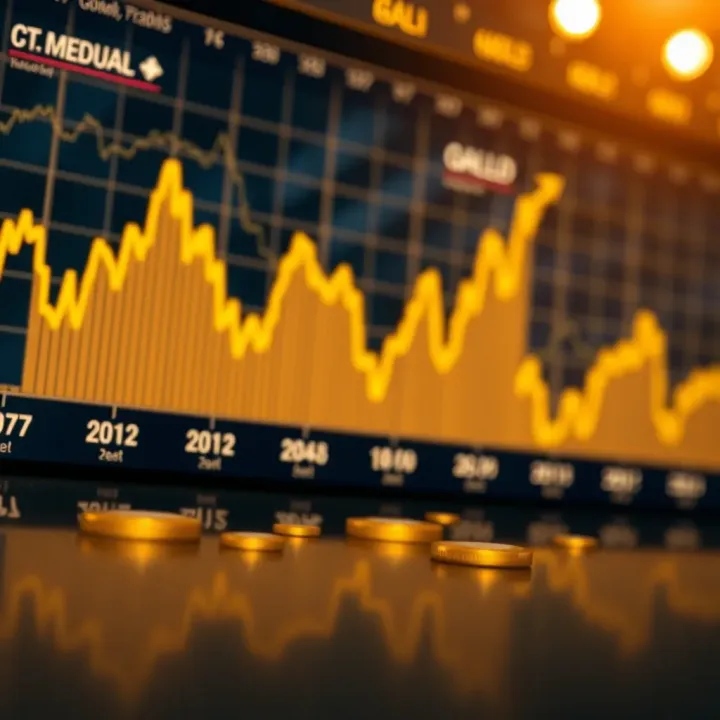
International events often create volatility. Recently, tensions in the Middle East or shifts in US Federal Reserve interest rate policies have sparked sudden rallies or drops in gold prices. These events influence investor sentiment as gold is often seen as a safe haven during uncertainty.
Inflation trends are another major factor. With rising prices eroding conventional savings returns, investors turn to gold to protect their wealth. The Kenyan inflation rate, alongside global inflation data, provides clues about future gold demand.
Investors should watch central bank moves closely—especially the US Federal Reserve and the Central Bank of Kenya—as their policies directly impact gold prices through interest rates and currency stability.
US Dollar Strength: A stronger dollar usually weighs on gold prices.
Interest Rates: Higher rates raise the opportunity cost of holding gold, reducing demand.
Geopolitical Risks: Conflicts and unstable regions push investors toward gold.
Inflation Expectations: Rising inflation pushes investors to gold as a safeguard.
Local Currency Movements: Shilling fluctuations impact Kenya's gold price directly.
For Kenyan investors, understanding these factors helps in timing gold purchases or sales. Monitoring the iTax portal for local economic data and staying updated with CBK statements can inform decisions. Given the sharp swings gold can experience, careful observation combined with a clear strategy serves local traders well.
In summary, the gold price today reflects a complex interplay of global economic signals and local currency behaviour, making it essential to stay updated on both fronts to make smart investment choices.
Understanding today's gold price movement is essential for traders and investors keen on making informed decisions. This overview highlights the current trends, market sentiment, and trading volumes, offering practical insights into how gold is behaving both globally and in the Kenyan context. Knowing these details helps in timing investments and managing risks effectively.
Todays spot price analysis: The spot price represents the most recent transaction price at which gold is bought or sold for immediate delivery. Today, the spot price reflects real-time changes driven by global economic signals and demand shifts. For instance, if inflation numbers from the US show a sudden rise, investors may rush to gold as a hedge, pushing spot prices up. Tracking this helps investors grasp immediate market reactions.
Comparison with recent weeks: Observing gold price movements over recent weeks provides perspective on whether the current trend is part of a larger pattern or just daily volatility. For example, if gold prices have steadily increased over three weeks despite minor dips, it indicates a bullish mood. This comparison assists investors in deciding whether to hold or adjust their positions depending on medium-term momentum.
Local price indicators in Kenyan Shilling: Gold prices in Kenya are affected not only by global rates but also by fluctuations in the Kenyan Shilling against the US Dollar. If, for example, the Shilling weakens sharply, importers and local dealers may see higher KSh prices for gold, affecting affordability and demand. Monitoring these local price indicators ensures investors can plan purchases and sales with currency risk in mind.
Investor demand patterns: Demand from different investor groups—such as jewellery makers, industrial users, and speculation-driven traders—affects market dynamics. For instance, increased buying by institutional investors during times of uncertainty boosts gold prices. In Kenya, demand surges during festive seasons when gold ornaments are popular, influencing short-term trends.
Activity on major global exchanges: Trading volumes on platforms like the London Bullion Market and COMEX show how active and liquid the gold market is. High volumes usually confirm strong interest and can indicate robust price moves. For instance, a spike in trading volume combined with rising prices often points to sustained upward momentum.
Kenyan investor behaviour: Kenyan investors rely heavily on physical gold and jewellery investments, with limited exposure to financial gold instruments. Moreover, the popularity of M-Pesa-enabled gold trading apps is growing, changing how accessible gold investment is. Recognising local behavioural trends helps in tailoring investment strategies that balance traditional and modern approaches.
Staying updated on these movements equips Kenyan investors and entrepreneurs with practical insights for better timing and portfolio management in today’s fluctuating market.
Understanding the factors that influence gold prices today is vital for anyone involved in trading, investing, or analysing financial markets. These elements provide the groundwork for predicting price movements and managing risk effectively. For Kenyan investors, this insight connects global economic realities to local market conditions, helping to plan better transactions and portfolio allocations.
Inflation rates and their effects play a significant role in determining gold prices. When inflation rises, the purchasing power of paper currencies declines, prompting investors to seek assets like gold that traditionally preserve value. For example, if inflation in the US spikes beyond expectations, gold prices often react upwards as the metal is viewed as a stable store of wealth. This relationship is especially important for Kenyan investors because local inflation trends combined with imported inflation through dollar imports influence Kenyan Shilling gold prices.
Interest rate changes by central banks directly affect the opportunity cost of holding gold. When central banks, like the US Federal Reserve, increase rates, fixed-income assets become more attractive, and gold may lose appeal because it does not yield interest. Conversely, when interest rates are cut or held low, investors might flock to gold, pushing prices higher. Kenyan investors should watch CBK’s (Central Bank of Kenya) moves alongside international actions since local interest changes affect borrowing costs and currency value.
Geopolitical tensions and stability often trigger shifts in gold demand. Conflicts, trade disputes, or political uncertainty usually lead traders and investors to buy gold as a safe haven. For instance, recent tensions in the Middle East or disruptions in global trade routes send a ripple effect, boosting gold prices globally. Kenyan investors must factor in such international events because they influence market volatility and drive demand for protective assets.
US Dollar strength and gold pricing are inversely connected most times. Since gold is priced in US dollars worldwide, a strong dollar generally makes gold more expensive for holders of other currencies, reducing demand and usually pushing prices down. On the other hand, a weakening dollar tends to lift gold prices. For Kenyan shilling holders, USD movements impact gold affordability since gold is often imported or valued in dollars.

Effect of Kenyan Shilling movements matters because fluctuations change local gold prices independently of the global gold spot price. When the Kenyan Shilling depreciates against the US Dollar, local gold prices often rise, making purchasing or investing in gold more costly. Conversely, a stronger shilling can ease the local cost of gold. This dynamic is crucial for traders who monitor forex alongside commodity prices to time their actions accurately.
Implications for importers and investors are clear: currency risks can erode profits or gains even if global gold prices hold steady. Importers sourcing gold jewellery or raw bullion pay more when shilling weakens, leading to higher retail prices. Investors holding physical gold or gold securities must consider currency exposure if their base currency is the Kenyan Shilling. Managing this risk through hedging or currency diversification helps protect investment value.
Gold price movements are never standalone; they respond to a mix of global economic indicators and currency dynamics. Staying informed on these factors offers Kenyan investors a strategic edge.
Keep an eye on US inflation reports and Federal Reserve announcements.
Track daily USD/KES exchange rates to anticipate local price effects.
Monitor geopolitical headlines that could shake investor confidence.
By linking these signals, you’ll better understand the forces shaping today’s gold price and make decisions that suit your financial goals.
Technical analysis looks beyond news and fundamentals to study price movements and trading volumes. It helps investors spot potential turning points in gold prices by examining charts and indicators, which is useful for timing trades in both global and Kenyan markets. Understanding key technical levels provides a clearer picture of where prices are likely to pause or reverse, giving traders an edge.
Identifying short-term price floors is about recognising areas where gold prices tend to stop falling and bounce back. These support levels often occur where demand increases, such as at round numbers like $1,900 or a price seen repeatedly holding in the past few days or weeks. For Kenyan investors, noting support in US dollars and tracking local prices in Kenyan shillings is essential because currency fluctuations can shift these floors.
On the other side, resistance points to watch indicate price levels where gold has struggled to break higher. When gold reaches these resistance zones, sellers might enter, halting upward moves. For example, if gold approaches $1,960 multiple times but fails to surpass it, traders know to watch this level closely as it may signal short-term selling pressure or consolidation.
Certain patterns signalling price shifts are also key. These include chart formations like double bottoms indicating strong support, or head-and-shoulders suggesting a possible trend reversal. Spotting these early can help investors prepare to buy before a rebound or sell before a fall, avoiding surprises in volatile markets.
Moving averages in trend analysis smooth out short-term price fluctuations to reveal the underlying trend direction. Common types like the 50-day or 200-day moving averages can show whether gold is in an uptrend or downtrend. If the short-term average crosses above the long-term one—a "golden cross"—it often signals rising prices, which traders in Nairobi or Mombasa might use to decide when to invest.
The Relative Strength Index (RSI) readings measure whether gold is overbought or oversold on a scale from 0 to 100. An RSI above 70 suggests gold might be overbought and due for a correction, while readings below 30 indicate oversold conditions, potentially a good buying opportunity. Kenyan investors can use RSI to avoid buying at price peaks or missing bargains during dips.
Volume trends confirming moves add weight to price changes. For example, a price increase on high trading volume suggests strong buying interest, making the move more reliable. Conversely, a rise on low volume might indicate weak conviction, warning against jumping in. Observing trade volumes on major exchanges like the London Bullion Market or COMEX can help investors decide if gold price shifts are likely to last.
Successful gold trading often depends on blending price levels, patterns, and indicators to make informed decisions. Technical analysis offers practical tools for Kenyan investors to navigate daily price swings confidently, aligned with broader economic factors.
By grasping these elements, you build a more complete forecast for today's gold prices, aiding smarter buying or selling strategies in both local and global markets.
Understanding today's gold price forecast matters a lot for Kenyan investors. It helps to time when to buy or sell gold and offers insight into how to protect wealth during uncertain times. Given Kenya's fluctuating currency and economic environment, a clear forecast enables smarter decisions rather than relying on guesswork.
Gold prices constantly shift due to global events and local conditions. Knowing the forecast helps investors decide the best moments to enter or exit the market. For example, if inflation is expected to rise globally, gold often becomes more valuable. A Kenyan investor might choose to buy gold before the price spikes, securing better value.
On the other hand, when the US dollar strengthens sharply, gold prices can dip. Selling at this point might protect gains or limit losses. Such timing, based on a solid forecast, can improve returns rather than reacting late to price changes.
Kenyan investors should consider gold as part of a broader investment mix, not the only asset. Its role is to reduce risk because gold tends to maintain value when stocks or the shilling weaken. Including a certain percentage of gold, such as 10-15%, can provide balance and cushion during volatile times.
However, relying too much on gold may limit growth since it does not produce income like shares or bonds. So, the forecast helps determine how much gold fits your risk appetite and financial goals, adjusting as market conditions shift.
Factors like the Kenyan shilling's stability, import duties, and local demand influence gold prices here, beyond global trends. If the shilling weakens, imported gold becomes costlier, impacting local prices.
Investors should watch these conditions closely alongside the global forecast. For example, during festive seasons when Kenyan demand for gold jewellery rises, prices may increase regardless of global slowdowns. Being aware of such local nuances allows investors to time their moves better.
Instead of holding physical gold, investors can use financial products like gold exchange-traded funds (ETFs) or gold accounts offered by Kenyan banks and brokers. These provide easier liquidity and often lower transaction costs.
For instance, an investor might prefer a gold ETF on the Nairobi Securities Exchange (NSE) for quick buying and selling without worrying about safekeeping physical gold. This approach suits those seeking exposure without the hassles of storage or security.
Silver and platinum also exist as investment options, though less popular locally. These metals react differently to market changes and can complement gold in a portfolio.
Silver tends to be more volatile but cheaper to buy, making it attractive for smaller investors. Platinum may benefit from industrial demand, providing a different risk and return profile. Including these metals can diversify precious metal holdings beyond just gold.
Besides gold, other assets like government bonds, real estate, and even agricultural land offer protection during economic uncertainty. Kenyan government bonds provide stable returns and liquidity, while land investments in growing urban areas may preserve capital.
Diversifying into these can reduce reliance on any single asset class. The gold price forecast helps decide when to shift funds between these safe havens, depending on which shows better resilience.
Well-informed investors who blend gold forecasts with local insights and diverse asset choices stand a better chance of weathering market swings and achieving steady growth.
By considering these implications, Kenyan investors gain more control in tailoring strategies that suit their needs and the country's economic realities.
Having trustworthy gold price information is essential for traders and investors in Kenya to make sound decisions. Given the volatile nature of gold markets, especially with currency fluctuations and geopolitical shifts, timely and accurate data enables investors to act confidently and avoid unnecessary losses.
Kenyan commodity exchanges provide one of the most direct ways to access up-to-date gold prices. The Nairobi Securities Exchange (NSE), while predominantly known for equities and bonds, also lists commodity derivatives that give investors insight into current trends. Additionally, the Kenya Mercantile Exchange (KME) plays a key role in offering real-time prices for gold and other precious metals traded locally. These exchanges offer transparent price discovery that reflects both domestic demand and global influences.
For Kenyan investors, having access to these prices is especially helpful when timing purchases or sales because they accurately mirror market conditions within Kenya, taking into account local demand and currency movements.
Official financial websites such as the Central Bank of Kenya (CBK) and Kenya Revenue Authority (KRA) occasionally provide gold price data or related economic indicators that influence gold prices. CBK’s reports on the Kenyan Shilling’s performance against the US Dollar are particularly relevant since gold is priced in USD globally. Understanding these currency shifts helps investors anticipate price changes locally.
Though less focused exclusively on gold, these sites offer reliable and authoritative information that investors can trust, making them useful references alongside more specialised commodity platforms.
Mobile and online platforms have revolutionised access to gold price information in Kenya. Websites like BullionVault Kenya and platforms such as Jiji Kenya provide live gold price updates with easy-to-understand interfaces. Users can track spot prices, historical data, and market trends without having to sift through complex charts.
Besides convenience, these platforms often offer tools such as alerts when prices hit certain thresholds, which helps investors act swiftly. They also reflect prices directly in Kenyan Shillings, simplifying the decision-making process for those who do not follow the foreign exchange movements closely.
Popular trading apps in Kenya such as KCB M-Pesa and Equity Bank’s mobile banking apps now include features for gold investment and trading. These apps allow users to buy physical gold or gold-backed financial products straight from their phones, eliminating the need to visit physical dealers or banks.
The practical benefit here is clear: instant access to gold markets combined with the user-friendly experience of familiar mobile money interfaces makes investing easier and less risky for the average Kenyan.
Security and convenience factors in these apps are paramount. Using registered and regulated platforms ensures your money and investments are secure. For example, apps using multi-factor authentication and encrypted transactions provide buyers with peace of mind, mitigating risks associated with fraud or cyber theft.
Additionally, the convenience of being able to check prices, place orders, and manage accounts anytime—even while commuting on a matatu—means that gold investment fits into busy lifestyles without hassle.
Payment options including M-Pesa integration are a key driver of mobile gold trading’s success. Since M-Pesa remains the predominant mobile money system in Kenya, its integration into trading apps offers a smooth payment process that most Kenyans are familiar with.
Users can cash in or out their gold investments easily using M-Pesa, avoiding lengthy bank procedures or cash handling risks. This seamless connection between payments and trading platforms reduces barriers to entry, especially for new or smaller investors.
Reliable gold price information paired with secure, accessible trading mechanisms empowers Kenyan investors to participate actively in global gold markets while managing their local risks effectively.
📈 Discover how global trends, the Kenyan shilling, and economic factors shape gold prices today. Learn to analyse forecasts and make smart investments in Kenya's market.

📊 Explore Bitcoin price trends in USD with detailed analysis of factors, predictions, and risks. Gain insights tailored for Kenya investors.

📈 Get detailed XAUUSD analysis today with current gold-dollar price trends, key economic and geopolitical factors, plus tips for Kenyan traders watching gold markets.

📈 Explore key drivers of XAU/USD gold prices against US dollar, including economic data, geopolitics & chart analysis—tailored for Kenyan investors.
Based on 15 reviews