
How to Link M-Pesa with PayPal in Kenya
Learn how to link your M-Pesa with PayPal for easy international transactions 🇰🇪💸. Get step-by-step tips, secure methods, and practical alternatives to transfer money safely.
Edited By
Amelia Foster
Trading forex in Kenya has become easier with the integration of M-Pesa payments by several brokers. M-Pesa, Safaricom's mobile money service, is a widely used payment platform across the country, trusted for its speed, security, and accessibility. This makes it a natural choice for Kenyan forex traders who want to move money quickly without relying on traditional bank transfers.
M-Pesa’s mobile payment system allows traders to deposit and withdraw funds directly from their forex trading accounts without complicated processes or hefty fees. Instead of visiting banks or waiting days, you can fund your forex account anytime and anywhere, even while on a boda boda ride or in the middle of a shamba.

Instant transfers reduce waiting times for deposits and withdrawals.
Lower transaction costs compared to international wire transfers or cards.
Minimal paperwork and no need for bank cheques or cards.
Widely accessible, even in rural areas where bank branches are scarce.
These benefits help traders be more agile, responding to market moves without delays caused by funds clearance.
Many traditional forex brokers still rely on bank payment methods that can be slow and expensive. Kenyan traders benefit when brokers embrace M-Pesa.
Several well-established forex brokers have recognised this trend and started offering the option to fund accounts with M-Pesa. They usually partner with local payment gateways specialised in handling M-Pesa to facilitate these transactions securely.
When choosing a broker that accepts M-Pesa, check the following to avoid unnecessary fees or delays:
Clear payment instructions: Brokers should provide step-by-step deposit and withdrawal guides.
Transparent fees: Some brokers or payment gateways may charge extra; confirm beforehand.
Regulation and reputation: Trade with brokers regulated by the Capital Markets Authority (CMA) or recognised global regulators.
Local customer support: It helps when issues arise, especially with payments.
Understanding these aspects makes your trading experience smoother and cuts down the risk of scams or payment glitches.
With M-Pesa, trading forex in Kenya truly becomes more local and accessible, helping traders stay connected to the market without unnecessary hurdles.
Choosing forex brokers that accept M-Pesa payments is a practical move for Kenyan traders looking for a smooth, secure way to manage their trading funds. With M-Pesa's wide usage and trusted reputation, it removes many barriers that traders might face with traditional banking methods. This option pays off in terms of speed, cost savings, and accessibility, which makes trading more straightforward for many Kenyans.
M-Pesa transactions happen almost instantly, which is a big advantage when trading forex. Swift deposits ensure you can react quickly to market changes without delays. For instance, Kenya's forex market is active round the clock, so having funds ready immediately can make a real difference when spot opportunities arise. Similarly, quick withdrawals mean profits return to your M-Pesa wallet fast, providing cash flow you can use immediately.
Depositing and withdrawing via M-Pesa usually involves lower fees than bank transfers or card payments. Banks can charge up to KSh 500 or more per international transaction, whereas M-Pesa fees stay modest, often just a few shillings or a small percentage. This cost efficiency means you keep more of your trading capital and returns, especially if you trade frequently or in smaller amounts.
M-Pesa reaches even the remotest parts of Kenya, unlike many banking services limited to urban centres. This extensive reach enables traders living outside Nairobi or Mombasa’s financial hubs to participate in forex trading seamlessly. Whether you’re in Kisii, Turkana, or the Coast, as long as you have a mobile phone with Safaricom reception, you can fund your forex accounts easily.
Many brokers in Kenya enable deposits through Lipa Na M-Pesa using Paybill numbers. This method is user-friendly and secure, requiring only your M-Pesa PIN and the Paybill number provided by the broker. It simplifies the deposit process — you just enter the amount and complete the payment without hassle, avoiding the need for bank cards or complicated online banking setups.
Some brokers accept mobile-to-mobile transfers, allowing traders to send money directly from their M-Pesa wallet to the broker’s mobile number. This feature adds flexibility, especially if you’re topping up your trading account on the go. For example, if you’re out in the field or just dismissing a quick transfer during your matatu commute, this seamless mobile option has you covered.
Topping up your forex account with M-Pesa is straightforward — usually just a few taps on your mobile phone. Withdrawals also come through M-Pesa, often with a simple request via the broker’s platform. This ease means you can manage your funds without visiting bank branches or relying on ATM cashouts. For many traders, this saves time and reduces the risk of carrying large sums physically.
Using M-Pesa for forex trading fits perfectly with the fast-paced, mobile-centred life of many Kenyans. It empowers traders by putting control of funds right in their hands, wherever they are.
These features make M-Pesa a preferred payment method for forex trading in Kenya, combining speed, convenience, and accessibility into one reliable package.
Choosing a forex broker that accepts M-Pesa payments offers Kenyan traders both convenience and security when managing their trading funds. Given M-Pesa’s widespread use, brokers who integrate this payment method help remove common barriers that come with international transfers, such as long processing times or high fees. However, not every broker with M-Pesa support is trustworthy or efficient, so it’s critical to know the right criteria for selecting the best brokers.
One of the non-negotiable checks before trusting any forex broker is their regulatory standing. Kenyan traders should prioritise brokers authorised by Kenya’s Capital Markets Authority (CMA) or well-known international bodies like the Financial Conduct Authority (FCA) or Australian Securities and Investments Commission (ASIC). This oversight ensures the broker follows strict standards of transparency, client fund protection, and dispute resolution.
Regulated brokers reduce the risk of fraud or unfair practices, so it’s wise to avoid those operating without licences, even if they offer M-Pesa payment options. Checking the regulator’s official records is a straightforward step that can save you from costly mishaps.
Next, it’s important the broker provides a robust trading platform that suits your style and experience level. Whether you prefer MetaTrader 4, MetaTrader 5, or proprietary platforms, make sure the tools for analysis, charting, and order execution are reliable and user-friendly.
Some brokers also offer mobile apps that integrate smoothly with M-Pesa, making deposits and withdrawals less of a hassle. Additionally, features like automated trading, risk management tools, and educational resources add real value to your trading account.
Good customer support is critical, especially if you encounter issues with deposits or withdrawals made via M-Pesa. Brokers with dedicated local teams or representatives in Kenya can respond faster and understand the local context better.
They should offer multiple communication channels—like telephone, email, and live chat—with support available during Kenyan trading hours. A local presence may also simplify matters such as identity verification and regulatory compliance.
Trusted brokers commonly offer several account types catering to different needs—for example, micro accounts for beginners and standard or VIP accounts for more experienced traders. These accounts usually differ in minimum deposits, spreads, leverage, and commissions.
Knowing a broker’s profile helps you match their offerings to your capital and trading strategy. For instance, some brokers require a deposit as low as KSh 1,000, making forex trading accessible even if you do not want to risk large sums.
Brokers accepting M-Pesa typically allow deposits via Lipa Na M-Pesa Paybill or till numbers associated with the broker’s payment system. Withdrawals often follow a similar route, crediting profits directly back to your M-Pesa wallet.
The ease and speed of these transactions vary by broker, so look for those with clear instructions and reliable processing times—often within 24 hours. Some brokers might charge small fees or set minimum withdrawal limits; knowing these details upfront saves you surprises.
Kenyan traders should check user reviews and ratings on forums, social media, and independent trading platforms. Genuine feedback can highlight issues like delays in payment, hidden fees, or poor customer service.
Remember, a broker with a solid reputation usually maintains transparency and handles M-Pesa payments professionally. Though nobody is perfect, a majority of positive user experiences is a strong indicator of reliability.
When considering forex brokers in Kenya, always verify M-Pesa payment integration against regulation, platform quality, and customer feedback to ensure your trading journey runs smoothly and securely.
Funding your forex trading account using M-Pesa simplifies the process for Kenyan traders, removing the need for bank cards or complicated transfers. Given M-Pesa's widespread use across Kenya, it offers a convenient and fast way to deposit money, allowing traders to focus more on their trading strategies without worrying about payment hassles.
This method also speeds up account top-ups and withdrawals, making it easier to react to market changes promptly. For example, instead of waiting days for a bank transfer to clear, you can fund your account in minutes through your mobile phone.
Before you can fund your account, you need to register with a forex broker that supports M-Pesa payments. This usually involves providing personal details and submitting identification documents to comply with regulatory requirements. Verification ensures your account is secure and helps prevent fraud, so it’s an important step you should not skip.
Some brokers might ask for scanned copies of your ID or a recent utility bill. Once your account is verified, you’ll get access to deposit options including M-Pesa, making your trading journey smoother.
Most brokers with M-Pesa integration use the Lipa Na M-Pesa Paybill system. To deposit funds, you log in to your M-Pesa menu, select ‘Lipa Na M-Pesa’, then ‘Paybill’, and enter the broker’s Paybill number. You then provide your account number with the broker as the account reference and enter the amount you wish to deposit.
This makes paying straightforward since you don’t need bank cards or online banking. Plus, the confirmation SMS from Safaricom provides immediate proof of payment, reducing delays or disputes over funds reaching the broker.
After depositing, it’s essential to confirm the payment on your broker’s platform. Most brokers automatically update your trading account balance once your M-Pesa transaction clears, but some might require you to notify them or upload the transaction receipt.
Tracking transactions is easy with M-Pesa as every transfer generates a unique confirmation code. Keeping this code handy helps resolve any issues swiftly with the broker’s customer support.
When you want to withdraw profits, you generally log into your trading account and request a withdrawal to your registered M-Pesa number. Brokers typically require you to specify the amount and confirm the request.
This step often requires identity verification to protect you against fraud, but once cleared, the withdrawal request is processed.
Withdrawals via M-Pesa typically take from a few minutes up to 24 hours, depending on the broker’s processing times. Some brokers have daily cut-off times, so requests made late might be delayed until the next business day.
Delays can also happen if additional verification is needed or if there are discrepancies in account details. Always double-check info before submitting your withdrawal to avoid unnecessary waiting.
While M-Pesa charges minimal fees for transactions, brokers might impose their own withdrawal charges or minimum limits. It’s advisable to check your broker’s fee schedule so you don’t get caught off guard.
Some brokers absorb these fees to encourage use of M-Pesa, while others pass the cost to clients. Planning your withdrawals to align with these costs can help you keep more of your trading profits.
Funding and withdrawing money easily using M-Pesa gives Kenyan forex traders a solid edge by improving access, speed, and control over their funds.
Trading forex in Kenya using M-Pesa offers simplicity and speed, but there are key matters you must watch out for to keep your funds safe and avoid unnecessary fees. Knowing these risks and how to handle them protects your investment and ensures smooth transactions.
Recognising legitimate brokers in Kenya is vital to protect yourself from fraud. Always verify whether a broker operates openly within Kenya and has a physical office or at least reliable local contact channels. Many scams prey on traders who deposit money through M-Pesa only to find it difficult to withdraw their profits later. Genuine brokers maintain transparent communication and provide clear terms for deposits and withdrawals.
Checking for Capital Markets Authority (CMA) licences or relevant international licences is a good way to confirm a broker's legitimacy. The CMA licences brokers operating legally within Kenya’s regulated financial space. Meanwhile, some brokers regulated by internationally accepted bodies like the Financial Conduct Authority (FCA) or the Australian Securities and Investments Commission (ASIC) can also offer security. However, even if a broker appears legitimate, confirm their M-Pesa payment integration is official and supported to avoid fake payment instructions.
If you suspect any suspicious activity—like unprompted requests for personal details, pressure to deposit more funds, or irregular M-Pesa payment details—report immediately. You can alert the CMA or Safaricom’s fraud prevention unit. Prompt reporting helps curb scams and protects other traders from falling victim.
M-Pesa typically charges a small transaction fee depending on the amount sent. For forex deposits, this fee usually ranges between KSh 20 to KSh 55 for amounts over KSh 1,000. While the costs are minimal compared to bank transfers, they can add up if you make frequent small deposits. Be aware that withdrawal fees may also apply depending on your broker’s policies.
Most forex brokers set minimum deposit amounts, often starting around $50 (about KSh 6,500). This minimum prevents very small trades that may not be worthwhile, but some brokers have higher thresholds. Knowing these limits helps you plan your trading budget accordingly and avoid unexpected declines when funding your account.
To reduce overall expenses, consider the following tips:
Make larger, less frequent deposits to lower the number of M-Pesa charges
Use brokers offering zero or low deposit fees via M-Pesa
Keep an eye on offers or promotions that waive fees temporarily
Avoid unverified third-party payment services that may impose hidden charges
Being cautious about these fees and limits keeps more of your money working for you instead of paying unnecessary charges. Proper planning also ensures your M-Pesa deposits and withdrawals go without a hitch.
Understanding these considerations helps Kenyan traders use M-Pesa confidently for forex trading. Always choose brokers with clear regulations, keenly watch your transaction fees, and promptly report any suspicious behaviour. That way, you minimise risks and maximise your chances for success in the forex market.
Learn how to link your M-Pesa with PayPal for easy international transactions 🇰🇪💸. Get step-by-step tips, secure methods, and practical alternatives to transfer money safely.
Explore top Forex brokers in Kenya with low minimum deposits 💰. Compare fees, platforms, and regulations to trade smart and protect your investment.
🔍 Find out the exact cost of withdrawing KSh 5,000 from M-Pesa in Kenya. Learn Safaricom’s fees, tips for saving on charges, and safer withdrawal methods 📲
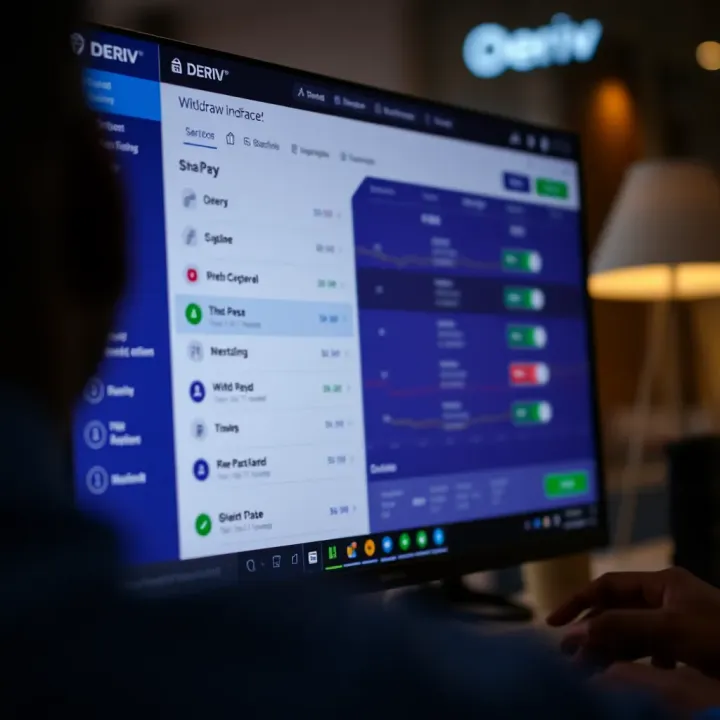
Learn how to withdraw funds from your Deriv account directly to M-Pesa in Kenya 🇰🇪. Step-by-step guide with tips to avoid delays and secure your cash instantly 💸.
Based on 5 reviews