

Swapping Money: How Currency Exchange Works in Kenya
🔄 Learn how to swap money safely using M-Pesa and other methods. Understand exchange rates, avoid common risks, and save when trading currencies in East Africa.
Edited By
Sophie Langley
The Finviz Currency Strength Meter offers a straightforward way for forex traders and investors to check which currencies are holding strong and which are losing grip. Instead of scanning endless charts and news, this tool gives you a quick snapshot showing the relative vigor of major currencies like the US dollar, euro, British pound, yen, and others in real-time.
At its core, the meter combines price movements of currency pairs into a single score for each currency, reflecting its current strength against a basket of other currencies. This helps you spot trends or reversals more easily without getting lost in complex calculations.
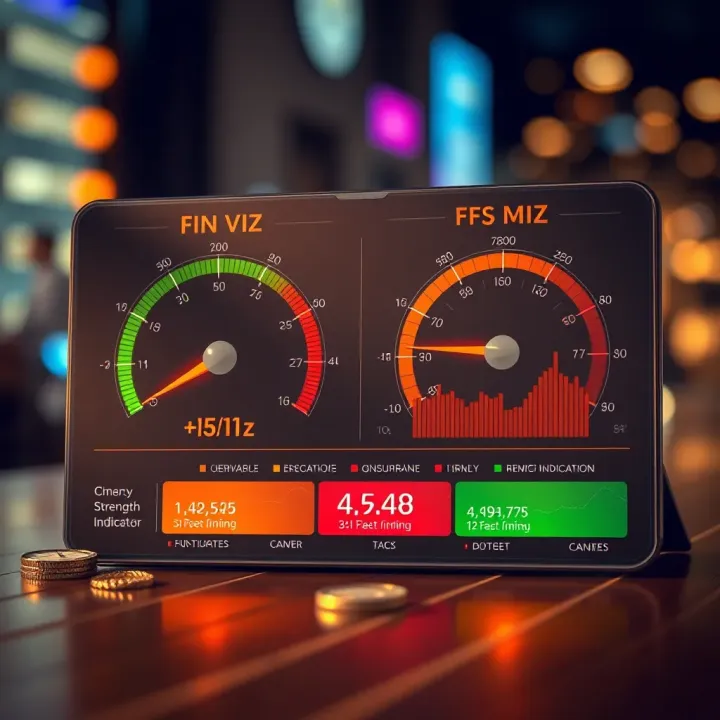
For example, if the meter shows the US dollar with a high strength score while the euro scores low, it points to potential buying opportunities in USD/EUR pairs. Traders can then confirm signals with other tools like moving averages or RSI to refine entries.
Using the Finviz Currency Strength Meter alongside other analysis methods can reduce guesswork and fine-tune your timing on trades.
In Kenya's fast-paced trading scene, where access to quick information is key, this meter supports more informed decision-making. It suits investors managing forex portfolios, entrepreneurs exposed to currency risks from imports or exports, and financial analysts tracking market movements.
The tool updates frequently, reflecting intraday shifts which are crucial for short-term traders seeking to capitalise on momentum. But it also serves long-term traders assessing overall currency trends before placing larger bets.
Overall, understanding how the meter derives its data and interpreting its scores can add another layer of insight when navigating forex markets. This article will explore its mechanics, practical applications, and how it compares to similar currency strength tools, helping you decide if it fits your trading style.
Price changes across a range of currency pairs
Real-time scoring reflecting current strength or weakness
Highlights currencies gaining or losing ground
Quickly assesses market sentiment without deep technical analysis
Useful for spotting ready-to-move currencies
Helps manage exposure in volatile forex environments
Keep this basic understanding in mind as you explore the Finviz Currency Strength Meter’s features and see how it can enhance your forex trading approach.
The Finviz Currency Strength Meter is a handy tool designed to show the relative strength of major currencies in real-time. This tool is particularly useful for traders, investors, and financial analysts who want to quickly understand which currencies are gaining or losing ground against others. Instead of tracking countless forex pairs individually, the meter condenses this information into a clear snapshot of currency strength.
This is especially relevant for Kenyan traders who follow forex markets involving the US dollar (USD), euro (EUR), British pound (GBP), and the Kenyan shilling (KES), among others. For example, if the meter shows the USD as strong and the EUR as weak, a trader might consider buying USD/EUR, expecting the dollar to appreciate relative to the euro.
Currency strength refers to how much a currency is appreciating or depreciating in value compared to other currencies. It’s not just one pair but an aggregate view based on several currency pairs involving that currency. For instance, the strength of the Kenyan shilling would be compared against the US dollar, euro, British pound, and others to give an overall indication of how the shilling is performing.
This view is practical because currencies rarely move in isolation. A strengthening shilling against the USD might come from a weakening USD overall or shilling's own improvements due to economic factors like better trade balances or favourable interest rates.
The Finviz meter simplifies what would otherwise be a time-consuming analysis of multiple forex pairs. Instead, it provides an at-a-glance visual of which currencies are currently strong or weak. Traders use this to spot trends, plan entry or exit points, and reduce risk from false signals.
For instance, if you spot that the British pound is weakening across several pairs, you might avoid buying GBP/USD even if it had a small dip in question, since the overall trend suggests continued weakness.
The meter usually presents currencies in a list or radial format with bars or colour codes indicating strength levels. Darker or longer bars signify stronger currencies, while lighter or shorter bars show weakness. This graphical layout helps users quickly scan the data without digging into numbers.
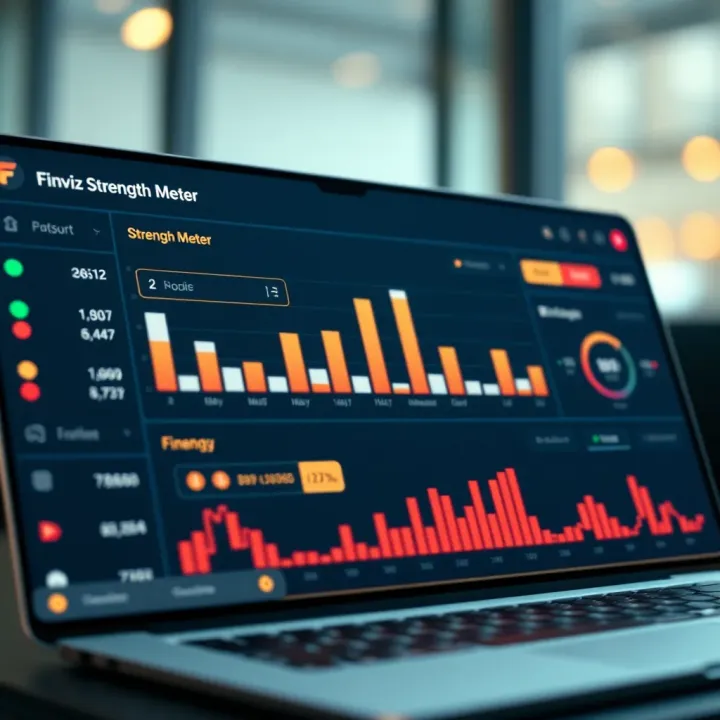
In the Kenyan context, a trader might check mid-day market reviews on Finviz to see how the shilling compares with the dollar or euro, using these visual clues to decide on forex transactions or hedging strategies.
The scores represent relative performance rather than absolute values. A ‘7’ might mean a currency is stronger than others at that time but doesn’t quantify exact exchange rate levels. Traders must combine these scores with other factors like news, economic indicators, and technical patterns.
For example, a Kenyan investor seeing the KES rated moderately weak should consider if the weakness aligns with reports of inflation or political developments before making trading decisions.
The Finviz Currency Strength Meter helps condense complex forex moves into a readable format, making it a practical tool for quick market insights and smarter trading decisions.
By understanding what the meter shows and how it presents data, traders can better navigate forex markets without getting bogged in information overload, especially useful when balancing between work and market hours in Kenya.
Understanding how the Finviz Currency Strength Meter functions starts with knowing its data inputs and calculation methods. The reliability of any tool depends on the quality and variety of data it uses. For traders and investors, getting a clear picture of what fuels this meter can help interpret the readings correctly and make informed decisions.
Forex pairs and their influence play a central role in the meter’s readings. The strength of a currency like the Kenyan shilling or the US dollar is not measured in isolation but through its performance across multiple forex pairs. For example, the KES/USD and KES/EUR pairs offer insight into how the Kenyan shilling is holding up against dominant foreign currencies. Since forex pairs fluctuate continuously due to supply and demand dynamics, the meter aggregates these shifts to assess a currency’s overall strength or weakness.
This approach is practical because it reflects true market sentiment. If the Kenyan shilling is strengthening uniformly against several major currencies, this signals genuine robustness rather than a one-off event in a single pair. Traders can then use this insight to decide when to enter or exit positions involving the Kenyan shilling or related currencies.
Apart from forex pairs, the meter also includes spot rates, futures, or indices in its data mix. Spot rates represent the current price for immediate currency exchange, providing up-to-the-minute accuracy. Futures indicate the expected price at a later date, showing market expectations and trends. Meanwhile, currency indices – such as the US Dollar Index – bundle performance across several pairs to reflect broader trends.
For example, if the spot rates show the euro weakening against the dollar, but futures project a rebound, traders might adjust their strategy to reflect short-term weakness but possible longer-term strength. Including these different data types gives the meter a more rounded view, allowing you to anticipate changes based on both present market conditions and future expectations.
The question of how strength is quantified boils down to comparing a currency’s movements relative to others over selected pairs and timeframes. The meter typically uses mathematical models that convert price changes into strength scores. These scores are scaled so they are easy to compare at a glance. Rather than watching each pair individually, the strength score merges insights so you understand the bigger picture.
This quantification helps traders spot strong currencies to buy and weak currencies to sell. For instance, if the British pound holds an 80% strength score while the Japanese yen is at 30%, a trader might consider going long on GBP/JPY, betting on the pound to outperform the yen.
Timeframes applied in measurement provide another layer of usefulness. Currency strength fluctuates depending on whether you look at a 1-minute chart or a daily chart. The Finviz meter might consider multiple intervals – such as 15-minute, 1-hour, and daily data – to provide a balanced view. This lets you spot trends that may be short-lived or more sustained.
Consider a situation where the Kenyan shilling looks strong on a 1-hour timeframe but weak on the daily. A day trader might capitalise on short-term moves, while a long-term investor might wait for confirmation from longer trends. Knowing which timeframe the meter uses lets you align its insights with your trading style.
The Finviz Currency Strength Meter blends diverse data and clever calculations to offer a quick, meaningful snapshot of currency power – a useful tool if you understand what feeds into it and how the metrics come together.
This combination of data types and calculation methods ensures that the meter's readings are grounded in real market behaviour, improving your chance to trade or invest with confidence.
The Finviz Currency Strength Meter gives traders a quick glance at which currencies are gaining strength and which are weakening. This can be a real asset when developing or adjusting your forex trading strategy. Understanding how to use this tool properly means you can spot opportunities where strong currencies meet weak ones, which often signals a chance to enter or exit trades profitably.
Identifying strong and weak currencies is fundamental in trading forex. The Finviz meter simplifies this by assigning strength scores to various currencies based on recent market movements. For example, if the US Dollar (USD) shows strong readings while the Euro (EUR) appears weak, a trader might consider buying USD/EUR, assuming the trend will continue. This helps cut through noise and guesswork. Kenyan traders can rely on this tool to track currencies relevant to their trading portfolios without spending hours analysing multiple charts.
Timing entry and exit points based on strength becomes clearer with the meter’s dynamic updates. Sudden shifts in strength scores can signal critical moments: a weakening currency might indicate an exit point to protect profits, or a strengthening one might hint at an entry to capitalise on momentum. For instance, if the British Pound (GBP) suddenly loses strength while the Kenyan Shilling (KES) holds firm, a trader dealing with GBP/KES pairs might decide to exit before the drop sharpens. This proactive approach reduces exposure to unexpected reversals.
When using M-Pesa or bank transfers for forex trading, the Finviz Currency Strength Meter can guide decisions on when to convert Kenyan Shillings to foreign currencies. If the meter shows the US Dollar strengthening against the Kenyan Shilling, a trader might prefer to convert KSh to USD earlier to avoid paying more later. Similarly, during times when the Kenyan Shilling strengthens, it might be the right moment to repatriate funds or take profits via bank transfer. This awareness helps manage transaction costs and potential forex risks linked to timing.
Considering local forex regulations and market hours is essential, especially in Kenya where forex trading is influenced by central bank policies and operating hours. The Nairobi Securities Exchange (NSE) and local banks typically run business from Monday to Friday, 8 am to 5 pm. Traders using the Finviz meter must align their forex activities with these timings, ensuring they adhere to KRA regulations and CBK guidelines. Also, knowing that major forex markets in London or New York open at different local times helps avoid trading during thin liquidity hours, reducing the risk of slippage and poor pricing.
Using the Finviz Currency Strength Meter actively can sharpen your market moves. By combining it with Kenyan-specific factors like payment methods and market rules, you stay steps ahead in the forex game.
Use the meter to spot strong vs weak currencies easily.
Adjust entry and exit points based on real-time strength changes.
Coordinate trades with local payment methods like M-Pesa for convenience.
Be mindful of Kenyan forex regulations and market hours to trade smartly.
These practical steps give you a tactical advantage in forex trading, making the Finviz Currency Strength Meter not just a tool but part of your trading playbook.
Comparing the Finviz Currency Strength Meter to other tools gives traders a clearer picture of its usefulness and limitations. Currency strength meters differ in how they analyse and present data, influencing how traders make decisions. For instance, some tools focus on real-time forex pairs, while others incorporate futures or commodity linkages. Understanding these differences helps traders pick a meter that fits their style and needs.
Several online currency strength tools are commonly used alongside or instead of the Finviz meter. Tools like the Investing.com Currency Strength Meter and the ForexFactory Strength Index analyse multiple forex pairs but often add economic indicators or news sentiment to their readings. Others, such as OANDA’s FXTrade platform, provide integrated strength metrics with trading capabilities, making it easier to act on signals immediately.
These alternatives often offer additional features like customizable timeframes or alerts. However, some can be overwhelming for beginners due to the sheer volume of data. For Kenyan traders, simplicity and clarity are essential because many rely on quick decisions, sometimes while commuting or during market hours influenced by Nairobi’s timezone.
The Finviz meter stands out for its clean, straightforward interface and fast updates. It provides a quick snapshot of currency strength using clear visual bars without cluttering the screen with extra market noise. This makes it especially useful for retail traders who need a reliable overview without accessing deep analytical tools. Besides, Finviz includes equities and commodities in its broader platform, giving more context to currency moves.
Accuracy and reliability considerations: The Finviz meter bases its strength calculations primarily on forex pair price movements, making it quite accurate for short-term analysis. However, it may not capture longer-term fundamentals or geopolitical events affecting currency values. For example, if CBK (Central Bank of Kenya) announces policy changes, the meter might lag in reflecting immediate market reactions. Thus, it is best combined with economic news sources for a fuller picture.
Ease of use and accessibility: The Finviz Currency Strength Meter is user-friendly, loading quickly on both desktop and mobile browsers, which is crucial for traders on the go. Unlike some tools that require costly subscriptions, Finviz offers free access to its core strength meter, making it accessible to Kenyan traders with limited budgets. The clear colour coding and simple scales mean users can interpret data without needing advanced training.
Using a currency strength meter that balances reliability and ease of use helps Kenyan traders stay alert to market shifts without getting bogged down in technicalities.
In summary, while other tools might offer more in-depth analytics or integration with trading platforms, the Finviz meter’s simplicity and speed make it a practical choice for many local traders. Knowing its strengths and weaknesses helps traders incorporate it wisely into their forex strategies.
Accessing reliable tools is vital for anyone taking forex trading seriously. Knowing where to find the Finviz Currency Strength Meter and related resources is more than just convenience—it can improve your decision-making and help you stay ahead. The Finviz platform offers a straightforward entry point to this tool, which can be particularly useful to Kenyan traders navigating both local and international forex markets.
The Finviz website puts its currency strength meter within easy reach, usually under the 'Forex' or 'Currencies' section in the main navigation menu. For a Kenyan trader, a quick glance at the homepage leads you to free tools that include live currency strength visuals. The layout is clean and intuitive. If you log in, you can bookmark the section for faster access during your trading days. This saves time when monitoring key currencies like the US dollar, euro, or even the Kenyan shilling, as you frequently check their relative strength before making moves.
Regarding accounts, Finviz offers both free and paid options. The free account grants access to the basic currency strength meter, allowing traders to gauge which currencies are trending stronger or weaker. However, upgrading to a paid account unlocks features such as more detailed timeframes, alerts for significant strength changes, and integration with other market screening tools. This can benefit traders who want deeper insights or real-time notifications, enabling quicker reactions to market shifts—a useful edge given how fast forex markets can change.
No tool works well in isolation. Kenyan traders should tap into local forex education platforms that break down complex concepts into practical lessons. Sites like Forex Trading Kenya or Investopedia Kenya offer tailored guides, videos, and webinars that include how to interpret strength meters within wider trading strategies. Using these alongside Finviz helps sharpen your skills and ensures your decisions rest on solid understanding.
Besides education sites, mobile apps like MetaTrader 4/5, FxPro, or the FXTM app provide portable charts and currency data that complement the Finviz meter. These apps let you confirm insights gleaned from the website and execute trades on the go, which is vital for Kenyans who move around or prefer to trade outside office hours. Forums such as Forex Peace Army or local WhatsApp groups also give community support—Here, traders exchange tips on currency strength, share trade setups, and help decode sudden market moves. This connection keeps you updated and confident in applying Finviz data in your trading routine.
Access to the Finviz Currency Strength Meter, paired with robust education and community tools, equips Kenyan traders with an all-around kit to handle forex markets intelligently and responsively.
Overall, knowing where and how to find the meter, plus gaining complementary knowledge and tools, is key to smarter forex trading in Kenya's fast-changing market environment.
🔄 Learn how to swap money safely using M-Pesa and other methods. Understand exchange rates, avoid common risks, and save when trading currencies in East Africa.

Explore Deeiv's features, uses, and impact across industries in Kenya 🇰🇪. Learn how it works, benefits, challenges, and future opportunities 🚀.

📱 Explore app derivatives: their math roots, real-world uses in tech/business, and impact on app development & performance in Kenya’s market.
📊 Explore trends and key factors shaping GBPJPY exchange rates. Get insights on economic data, geopolitical events, and tips to trade this currency pair confidently.
Based on 6 reviews