
Understanding Derivatives in Kenyan Finance
Explore how derivative instruments operate in Kenyan finance 📉📈, their types, risks, benefits, and why investors and businesses use them today.
Edited By
Daniel Foster
The volatility index, often called the VIX, measures how much the market expects prices to swing over a short period. In simple terms, it shows the degree of nervousness investors feel about the future. This matters because high volatility tends to mean the market is uncertain or unstable, while low volatility suggests steady conditions.
Traders and investors in Kenya keep an eye on the volatility index to better manage their risks. For instance, if the VIX jumps, it often signals potential price drops or wild swings ahead, prompting cautious decisions. On the other hand, a low VIX might indicate a calmer market where steady returns are more likely.

The VIX is calculated based on the price of options — contracts that give the right to buy or sell stocks at predetermined prices. When option prices rise, it means traders expect bigger movements in the stock market. The VIX reflects these expectations as a percentage showing annualised market volatility.
For example, if the VIX reads 25, the market expects daily price changes equivalent to 25% volatility over a year. Investors use this to predict and prepare for market swings rather than relying solely on past data.
Kenyan markets, like the Nairobi Securities Exchange (NSE), can be affected by global events, currency fluctuations, or local political developments. The volatility index helps market participants understand when such events might cause sharp price movements.
Monitoring the VIX enables Kenyan investors to adjust their portfolios ahead of market turbulence, potentially reducing losses during uncertain times.
Practical uses include:
Risk management: Adjusting asset allocations when the VIX spikes to avoid heavy losses.
Timing trades: Deciding when to enter or exit the market based on expected volatility.
Hedging: Using options or other strategies to protect investments against big swings.
By understanding the volatility index, traders and investors in Kenya can better navigate the ups and downs of financial markets, making smarter decisions that align with their risk tolerance and investment goals.
The volatility index serves as a barometer for market uncertainty, signalling the expectation of price swings in financial markets. For traders and investors, it’s a practical tool that highlights how much fluctuation they might anticipate over a short period, often 30 days. This is important because understanding volatility helps in managing risk and making timely decisions.
Simply put, the volatility index measures the market’s expectation of future volatility. It's not about past market movements but what traders believe will happen ahead. A high volatility index reading suggests the market expects bigger price swings, which usually means higher risk or potential opportunity. Conversely, a low reading indicates calm markets with less expected movement. The most famous volatility index is the VIX, which measures expectations based on the S&P 500 options prices.
Market expectations feed directly into the calculation through options pricing. Options allow investors to hedge or speculate on price changes, so their prices reflect what traders anticipate about future market moves. For example, if investors rush to buy options to protect their portfolios against a possible drop, the cost of these options rises, pushing up the volatility index. This process makes the index a live gauge of market fear or confidence, summarising many views into a single, easy-to-understand number.
Various markets have their own volatility indexes reflecting their specific stock exchanges. Besides the well-known Chicago Board Options Exchange (CBOE) VIX for the US market, other examples include:
VSTOXX: Tracks volatility in the Euro Stoxx 50, representing European equities.
NIKKEI Volatility Index: Focuses on the Japanese stock market.
India VIX: Shows expected volatility on the Bombay Stock Exchange (BSE).
These benchmarks enable investors worldwide to monitor risk levels specific to their local or global markets. While Kenya does not yet have a dedicated volatility index like the VIX, understanding these benchmarks helps in grasping how volatility is assessed globally.
The volatility index is more than just numbers; it's a snapshot of how jittery or composed markets are, helping investors react and plan better.
By knowing what the volatility index represents, Kenya’s traders and investors can better interpret market signals and align their strategies with actual risk levels in local and international financial markets.
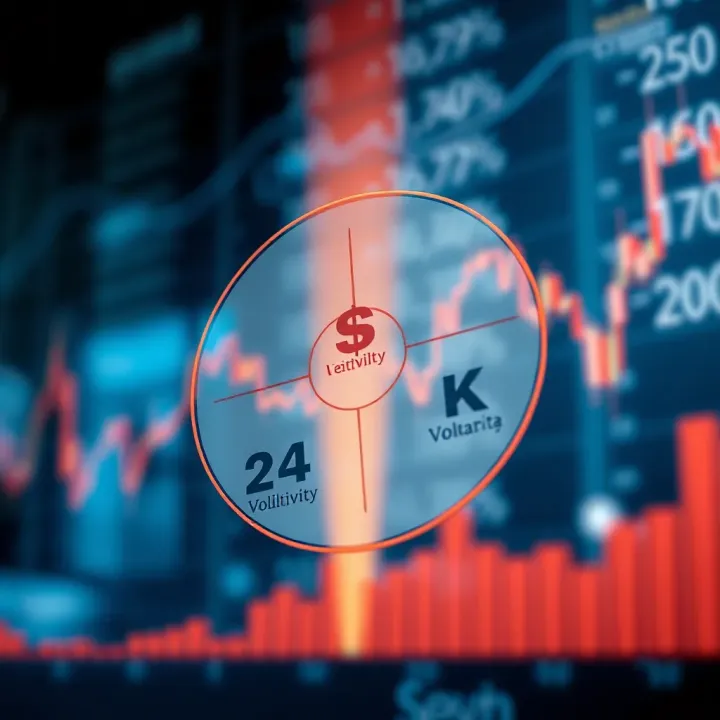
Measuring and calculating the volatility index is essential for understanding market uncertainty. It provides investors and traders with a quantifiable number that reflects how much the market expects prices to swing over a short period. Accurate measurement helps in risk management and shaping trading strategies, especially in unpredictable market environments.
The volatility index is mostly derived from the prices of options contracts on a given stock market index. Options give clues about traders’ expectations since their prices increase when markets expect larger price swings. Key inputs include the prices of near-term call and put options across various strike prices, plus the time remaining until these options expire. This range of strikes helps capture market expectations at different price levels.
Besides market data, implied volatility derived from options prices is crucial because it reveals expected future volatility rather than past price changes. For instance, during times of political unrest or economic shocks, option prices tend to reflect these fears by increasing the volatility index.
Several volatility indexes use variations of the same mathematical approach, which involves calculating a weighted average of the implied volatilities from options contracts. The Chicago Board Options Exchange’s VIX, for example, uses a formula that integrates prices from both call and put options with different strikes but the same expiry to generate a 30-day expected volatility measure.
The method uses an interpolation technique to standardise the time frame to 30 days, ensuring comparability over time. Calculations employ firms like CBOE’s proprietary models, including adjustments for dividend expectations and interest rates, to refine volatility estimates.
In practice, this means the index is not just a simple average but a carefully weighted measure reflecting how much the market thinks prices could change, presented in annualised percentage terms.
While useful, the volatility index has some limitations. First, it reflects only expected volatility, which may differ from actual price changes. Sudden events not priced into options can cause the market to move in ways the index didn’t predict.
Additionally, liquidity of options markets affects accuracy; thin markets can distort option prices, skewing the volatility estimate. In smaller or emerging markets, like Kenya’s Nairobi Securities Exchange (NSE), lower options activity compared to bigger exchanges may lead to a less reliable volatility index.
Lastly, the model assumes markets are efficient and information is quickly reflected in options prices. In practice, delays or investor irrationality can cause discrepancies.
The volatility index offers a window into market sentiment but should be one part of a wider risk assessment toolkit, not a standalone predictor.
Understanding how the volatility index is measured helps investors use it wisely, avoiding pitfalls while benefiting from the insights it provides about market mood and risk.
Market volatility, shown through the volatility index, reflects the ups and downs investors expect in the near future. Understanding what stirs this volatility is vital for investors and traders because it helps them anticipate market moves and manage risks better. Several factors contribute to the rise and fall of volatility, from economic shifts to political events and how investors feel about the market.
Economic data, such as inflation rates, GDP growth, and employment figures, strongly influence market volatility. For example, if Kenya’s inflation spikes unexpectedly due to higher fuel prices, traders might get jittery, pushing the volatility index higher. Similarly, when the Central Bank of Kenya changes interest rates, markets react quickly. If rates go up to curb inflation, stock prices often drop, making the market more volatile. Also, global events like fluctuating oil prices or supply chain disruptions can affect Kenyan markets, trickling down to the volatility index. Investors watching these indicators closely can better anticipate periods of turbulence.
Political stability, or the lack of it, has a direct impact on market confidence. Elections in Kenya, for instance, often bring periods of uncertainty. The run-up to the 2022 general election saw spikes in volatility as investors weighed the risks of policy changes or unrest. Other events such as changes in government regulations, trade policies within the East African Community (EAC), or land reform debates can also rattle markets. When political developments seem unclear or contentious, fear sets in and markets become more unpredictable. This unpredictability raises the volatility index, signalling higher risk.
Investor mood—sometimes driven more by emotion than facts—can dominate market behaviour. During times of panic, such as a sudden global downturn or bad corporate earnings, fear spreads quickly. This panic selling boosts the volatility index as more traders rush to hedge or exit positions. On the flip side, overconfidence during bull runs can suppress the volatility index as investors assume the market will keep rising. In Kenya, retail investors who track trends on platforms like M-Pesa or social media groups also influence sentiment, sometimes amplifying movements in shares listed on the Nairobi Securities Exchange (NSE). Knowing these sentiment swings helps traders adjust their strategies to avoid losses.
Volatility is not just about the numbers but also about human behaviour and reactions to ever-changing economic and political scenes. Understanding these causes guides better investment decisions in a market as dynamic as Kenya’s.
In summary, the volatility index reacts to economic data, political events, and how investors think and feel. For Kenyan traders and investors, keeping an eye on these factors offers a clearer picture of when markets might get shaky and how to prepare accordingly.
The volatility index, often called the "fear gauge," guides many investors and traders in navigating market uncertainty. Its readings reveal expected fluctuations in the market, helping investors plan their next moves. Rather than just a number, the volatility index forms a practical tool for managing risk, timing trades, and shaping investment strategies.
Investors use the volatility index primarily to manage risk and shield their portfolios during unstable times. For example, when the index shoots up sharply, it signals that markets expect higher swings, usually due to economic shocks or political unrest. Kenyan investors, especially those with exposure to NSE equities or regional markets, often adjust their portfolios by reducing exposure to volatile stocks or shifting towards safer assets like government bonds or cash.
Hedge funds and institutional investors might also buy options or volatility-linked instruments as insurance against sudden downturns. This approach limits losses without forcing them to sell off assets amid panic-selling.
Traders keen on timing their market entry and exit monitor changes in the volatility index closely. A rising volatility index can mean a market sell-off is near, so some traders wait for the peak before buying, hoping for dips to offer cheaper stock prices. Conversely, sharply falling volatility suggests calming markets, which might be a signal to sell overbought assets before a correction.
In Kenya’s context, retail traders might use volatility signals combined with local news — such as election periods or foreign investment inflows — to time their trades effectively. However, relying solely on the index is risky; it should be one tool among many to confirm trading signals.
There are financial instruments explicitly linked to the volatility index, like volatility futures and options. These allow investors to bet on or hedge against future changes in market volatility without directly trading stocks. While these products are more common in developed markets, Kenyan investors accessing global exchanges through brokers can utilise them to diversify risk.
Another strategy involves pairs trading or volatility arbitrage, where traders exploit differences between expected and realised volatility. Sophisticated investors may also combine volatility instruments with other asset classes to stabilise returns during market turbulence.
The volatility index is more than a market mood indicator; it’s a practical compass helping traders and investors steer through uncertain waters with better confidence and control.
By understanding how to use the volatility index effectively, investors in Kenya and beyond can protect their funds, spot better entry points, and explore new financial products that respond to market swings.
The Volatility Index (VIX) provides valuable insight into how uncertain or stable market investors feel. For Kenyan investors and traders, understanding the VIX is especially useful because the Nairobi Securities Exchange (NSE) often reacts strongly to both local and global events. This index helps investors gauge potential shifts in market sentiment, giving a clearer picture of risk levels in real time.
While the global volatility indices like the VIX measure expectations for the S&P 500 in the US, Kenya does not yet have an equivalent official volatility index. However, NSE share prices and volumes tend to reflect global market jitters captured by the VIX. For example, during times of global uncertainty, NSE-listed companies, especially those with foreign exposure like Safaricom or Equity Bank, experience increased price swings. This connection means Kenyan traders can monitor the VIX alongside NSE movements to anticipate volatility.
Moreover, the NSE 20 Share Index itself shows periods of higher volatility, visible in sudden price changes or increased trading volumes. Financial analysts locally track these patterns to adjust portfolios or hedge risks. As Kenya's capital markets grow, there is ongoing discussion on creating local volatility benchmarks to provide more tailored insights into market behaviour.
Kenya’s market volatility often spikes during significant political events such as elections, budget announcements, or turbulent policy decisions. For instance, the 2017 general elections raised volatility as uncertainty about the results affected investor confidence, leading to sharp NSE index fluctuations.
Economic shocks, like currency depreciation or unexpected interest rate changes by the Central Bank of Kenya (CBK), also increase market jitteriness. During such times, sectors tied closely to domestic consumption and credit, such as banking and manufacturing, tend to show more price movements.
Local factors like prolonged droughts, which affect agricultural output, can also lead to market volatility, especially for companies linked to agro-based industries. For Kenyan investors, recognising these triggers helps in timing when to reduce risk or seek safer investment options.
Kenyan investors can better manage risks by keeping an eye on both international volatility signals and local market movements. Here are some useful tips:
Combine Global and Local Data: Track the VIX alongside NSE index trends to get a fuller picture of risk, as local stocks are influenced by global market moods.
Pay Attention to Political and Economic Calendars: Be alert to upcoming elections, CBK meetings, or budget releases that often precede spikes in volatility.
Use Stop-loss Orders: This helps limit losses during unexpected market swings, a practical tool in volatile periods.
Diversify Across Sectors: Mixing stocks from different industries, such as telecommunications, banking, and manufacturing, reduces exposure to sector-specific shocks.
Consider Volatility-linked Instruments: Though still developing in Kenya, products like derivatives or exchange-traded funds (ETFs) focused on volatility can provide some protection or trading opportunities.
Monitoring volatility is not about avoiding risk completely but managing it smartly, especially in markets like Kenya's where internal and external factors interplay heavily. Staying informed and responsive can safeguard investments and open doors to strategic gains.
Understanding volatility through the lens of the Kenyan market context equips investors with sharper tools to navigate fluctuations, whether caused by global scales like the US market or homegrown developments on the NSE.
Explore how derivative instruments operate in Kenyan finance 📉📈, their types, risks, benefits, and why investors and businesses use them today.
Explore Deriv trading in Kenya 📈! Learn platform features, trade types, risk strategies & expert tips to trade smartly and safely. Start with confidence! 💼

📚 Learn how to effectively implement Deriv with practical tips, explore syntax, common challenges, and performance strategies tailored for developers.
Explore Deriv Forex in Kenya 🇰🇪! Get insights on trading features, strategies, tools, risks, and regulations to trade confidently and smartly.
Based on 6 reviews