
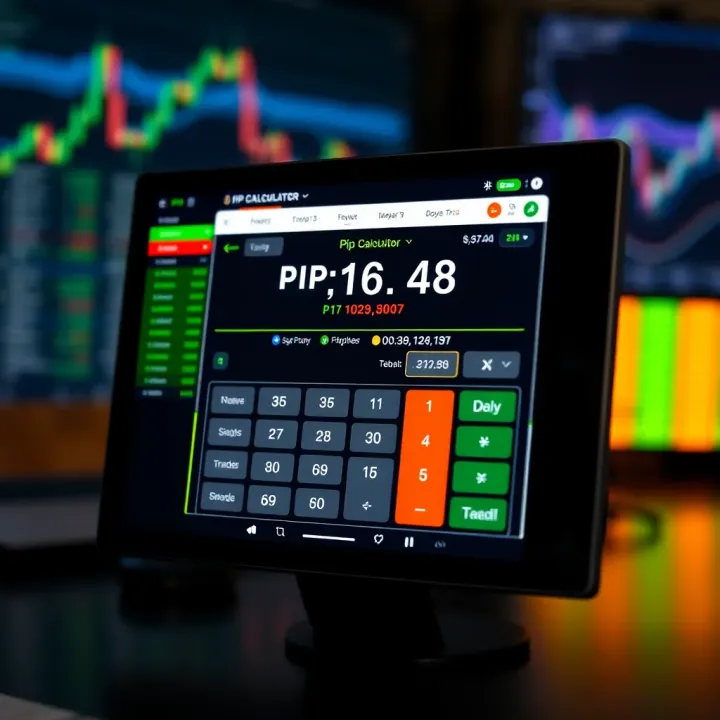
Using the Deriv Pip Calculator for Forex Trading in Kenya
Explore how the Deriv pip calculator helps Kenyan forex traders easily calculate pip values 🤑 and refine trading strategies for better decision-making 📊.
Edited By
Isabella Turner
A PIP calculator is an essential tool for anyone engaged in forex trading. It helps you work out exactly how much profit or loss you are making when the price of a currency pair moves. Since the forex market involves tiny price fluctuations called "pips," knowing their real monetary value makes a big difference in managing your trades.
A PIP, which stands for "percentage in point" or "price interest point," usually represents the smallest price change a currency pair can move. For most pairs, a pip is 0.0001 of the price. For example, if the USD/KES moves from 110.5000 to 110.5100, that’s a one pip move. But to get actual profits or losses from these movements, just knowing the pip change isn't enough — that’s where a PIP calculator comes in.

A PIP calculator takes your trade details — such as the currency pair, trade size (lot size), and current exchange rate — to tell you the value of each pip in your chosen currency. This helps you see how much money you stand to gain or lose with each pip's movement.
Imagine you open a trade on the EUR/USD pair with a standard lot size of 100,000 units. The PIP calculator will show you that each pip is worth about $10. So, if the price moves 15 pips in your favour, you have a gain of $150. If it moves against you by 15 pips, you lose $150. This immediate clarity helps you manage your risk better as you decide how much capital to risk or where to place stop-loss orders.
Risk Management: Knowing pip value helps you control the size of your trade according to how much loss you can handle.
Trade Planning: It makes calculating potential profits easier before you enter a position.
Clarity in Currency Conversion: When you trade pairs that don’t involve your base currency (say, KES), the calculator factors in exchange rates to give pip value in your currency.
Effective use of a PIP calculator is a straightforward way to avoid surprises from price swings and stay in control of your forex trading strategy.
By understanding how to use a simple tool like this, your trading decisions become more informed and your exposure to unexpected losses reduces. In the next sections, we will look at detailed steps on how to use a PIP calculator for various currency pairs and trading scales.
A PIP, or "percentage in point," is the smallest price change in a currency pair on the forex market. Typically, it represents a movement of 0.0001 for most currency pairs, except for ones involving the Japanese yen, where a PIP equals 0.01. This subtle change might seem minor, but it's the unit traders use to measure gains or losses from price shifts.
Understanding what a PIP is allows traders to calculate their potential profit or loss efficiently. For example, if the USD/KES pair moves from 110.2500 to 110.2600, that’s a one PIP move. Knowing this helps you assess how much your trade position gains or loses from such changes, especially when combined with your lot size.
PIPs serve as the building blocks of price fluctuations in forex trading. When the price of a currency pair changes by one PIP, it means the exchange rate has moved by this minimum unit. Multiple PIPs can quickly add up, significantly impacting the value of your trade.
Let’s say you bought 1 standard lot of EUR/USD at 1.1000. If the price rises to 1.1050, it means the price moved 50 PIPs. Since every PIP's value depends on your trade size, this movement could represent a considerable profit. Conversely, a drop by the same number of PIPs means a matching loss.
Remember, not all PIPs have the same monetary value—it varies with the currency pair and the size of your trade.
Traders who grasp how PIPs influence price changes can better manage risks and set effective stop-loss or take-profit points, thereby safeguarding their investment and maximising potential returns. This is exactly where using a PIP calculator becomes a practical tool for real-time decision-making in forex trading.
Understanding PIPs also makes it easier to follow market trends and interpret the extent of currency movement, ensuring you’re not caught off guard by sudden swings in the forex market.
A PIP calculator simplifies the process of figuring out the exact value of a pip movement in forex trading. Since currencies trade in pairs, and their values shift in tiny increments called pips, having a quick way to translate these movements into monetary terms is vital. This calculator helps traders understand how price changes impact their potential profit or loss, guiding better decisions on trades and risk.
The first key input is the currency pair you're trading, such as USD/KES or EUR/USD. Each pair behaves differently because of its base and quote currencies. For instance, if you’re trading USD/KES, the pip value depends on how many Kenyan shillings make one US dollar. Some pairs have pips measured at the fourth decimal place (0.0001), while pairs involving the Japanese yen, like USD/JPY, use the second decimal place (0.01) for pip calculation. This difference affects the pip value, so selecting the right currency pair is crucial for accurate results.
Lot size represents how much of the currency pair you are buying or selling. Standard lots are often 100,000 units, but there are also mini lots (10,000 units) and micro lots (1,000 units). The larger the lot size, the higher the pip value. For example, trading one standard lot of USD/KES might mean each pip movement equals KS,000, while for a mini lot, it's KS00. This aspect helps traders understand how much exposure they have and the potential gain or loss from a single pip move.
The current exchange rate of the currency pair directly influences the pip value in your account currency. If your account is in Kenyan shillings and you trade a pair like EUR/USD, fluctuations in the EUR/USD rate can change the pip value in KSh terms. The calculator takes this exchange rate to convert pip changes into a familiar currency value. That way, you can see exactly how much a pip shift impacts your wallet.
Once you've entered the currency pair, lot size, and exchange rate, the PIP calculator delivers the pip value in your chosen currency. This output tells you the exact amount you gain or lose per pip movement, making it easier to estimate profits and losses before placing trades. For example, if the calculator shows a pip value of KS00, a 10-pip move means a KS,000 change on your trade.
Understanding the output allows you to size your trades wisely. It ensures your risk matches your trading strategy and helps avoid unexpected losses.
In summary, a pip calculator turns complex forex details into crystal-clear numbers tailored to your trade specifics. Knowing how it works means you trade smarter and manage risk like a pro.
A PIP (percentage in point) calculator is an essential tool for any serious forex trader. It helps you quantify gains or losses based on price movements in currency pairs, turning complex numbers into clear financial figures. Knowing how to use a PIP calculator effectively puts you in control of your trades and sharpens your decision-making.
Understanding your potential profit or loss before entering a trade saves you from costly surprises. A PIP calculator quickly translates pip movements into monetary values. For example, if you trade the USD/KES pair with a standard lot size of 100,000 units and the exchange rate shifts by 10 pips, the calculator shows exactly how much you gain or lose in Kenyan shillings. This clarity is crucial because forex prices often move in tiny fractions, making it hard to eyeball profits manually.
Besides, it helps you compare trades across different currency pairs. Suppose a trader moves from EUR/USD to GBP/USD; the pip value changes due to differing exchange rates and lot sizes. Using the calculator, you can estimate potential returns on both pairs and decide wisely where to place your money.
Risk management stands at the heart of sustainable forex trading. A PIP calculator assists you in setting precise stop-loss and take-profit levels by showing the exact monetary impact of a set number of pips. For instance, if your risk tolerance is KSh 5,000 per trade, you can use the calculator to determine the stop-loss distance in pips relative to your lot size and currency pair.
This detailed insight stops you from guessing and helps avoid emotional decisions when the market fluctuates. For example, a trader might plan to enter USD/JPY at a rate of 110.00 with a stop-loss 50 pips away. The calculator reveals that with a micro lot (1,000 units), a 50-pip move equals roughly KSh 450. Knowing this, you can adjust your position size or stop distance to align with your budget and risk profile.
A PIP calculator bridges the gap between abstract price movement and real money. Without this tool, managing trades precisely becomes guesswork.
In summary, whether you’re estimating your take-home profit or deciding where to place your safety nets, a PIP calculator gives you a sharper view. It helps remove guesswork, making your trading approach practical and data-driven. Learning to interpret its output correctly can turn small pip differences into well-informed trading moves that protect your capital and grow your portfolio steadily.
Using a PIP calculator correctly can make a significant difference in your forex trading outcomes. This tool helps you understand the financial impact of price movements by converting pips to monetary values. Following a clear, step-by-step process ensures accuracy and helps you manage risk with confidence.
Before you start using a PIP calculator, collect the key details: the currency pair you want to trade, your trade size (lot size), and the current exchange rate of the pair. For example, if you plan to trade EUR/USD, note the lot size—typically 1 standard lot equals 100,000 units—and check the latest exchange rate, say 1.1050. Having these inputs at hand makes sure you can enter accurate data into the calculator.
Accuracy in feeding the PIP calculator is crucial. Start by selecting the correct currency pair because PIP values differ between pairs due to their price structures. Next, input the lot size; mistakes here can lead to vastly different pip values. For instance, confusing a mini lot (10,000 units) for a standard lot will distort profit or loss estimates. Finally, enter the current exchange rate. Most calculators update this automatically, but it’s good practice to verify against your trading platform to avoid errors.
Once you have entered all details, the calculator will show the PIP value in your account currency or another preferred currency. This number tells you how much each pip movement will gain or lose. For example, a PIP value of KS,029 means that if the currency pair moves by one pip, you make or lose KS,029 depending on your position. Use this information to set realistic take-profit and stop-loss levels, matching your risk appetite.
Remember, the PIP value changes with currency fluctuations and lot sizes. Always double-check before executing trades.
By clearly understanding each step—from gathering info, inputting data precisely, to reading and applying the results—you sharpen your decision-making. This practical approach will help you avoid costly mistakes and manage your trading capital better.
Understanding how to use a PIP calculator properly can save you from costly errors in forex trading. Many traders, especially those just starting out, fall into common traps that distort their profit and loss estimates. Avoiding these mistakes ensures your risk management stays sharp and your trading decisions reflect reality.
Not all currency pairs behave the same when it comes to PIP values. Major pairs like EUR/USD have different pip calculations compared to exotic pairs like USD/TRY. This is mainly due to how the quote currency and base currency affect pip value. If you ignore these differences, you might think a 10-pip gain means the same monetary value across pairs, which is rarely true. For example, a 10-pip move in USD/JPY might represent a different value in Kenyan shillings than a 10-pip move in GBP/USD. Using the calculator without adjusting for the specific currency pair can mislead your expectations, so always select the correct pair in your PIP calculator.
Lot size directly affects how much each pip movement impacts your trade profit or loss. Standard lots, mini lots, and micro lots represent different volumes of currency traded. If you use the PIP calculator but forget to input the correct lot size, the resulting profit or loss will be inaccurate. For instance, a 1-lot trade typically equals 100,000 units of currency, while a micro lot is just 1,000 units. Traders often mix these up and end up risking more or less than intended. Always double-check your lot size before calculating, to keep your trades aligned with your actual investment and risk tolerance.
Exchange rates can fluctuate throughout the day, affecting the pip value especially when your account currency differs from the quote currency. A common error is assuming the exchange rate is static or using outdated figures in the PIP calculator. For example, if your trading account is denominated in Kenyan shillings but you’re trading a USD pair, changes in the KSh/USD rate will shift the actual value of your pips. Using a stale or incorrect exchange rate can lead to wrong profit calculations and poor risk management. Verify the current exchange rate before you enter it into the calculator to get reliable outcomes.
Accurate use of a PIP calculator depends on keen attention to these details. Overlooking any of them can skew your entire trading strategy and possibly lead to unexpected losses.
Getting these factors right ensures that you know exactly where you stand with each trade, helping you take control of your forex profits and losses. It’s about making smarter choices every time you calculate.
Explore how the Deriv pip calculator helps Kenyan forex traders easily calculate pip values 🤑 and refine trading strategies for better decision-making 📊.
Explore Deriv trading in Kenya 📈! Learn platform features, trade types, risk strategies & expert tips to trade smartly and safely. Start with confidence! 💼
Explore Deriv Forex in Kenya 🇰🇪! Get insights on trading features, strategies, tools, risks, and regulations to trade confidently and smartly.
Discover how Deriv bots automate trading with set strategies on platforms like Deriv, their benefits, risks, and tips for smart use 📈🤖💡
Based on 12 reviews