
Using the Deriv Pip Calculator for Forex Trading in Kenya
Explore how the Deriv pip calculator helps Kenyan forex traders easily calculate pip values 🤑 and refine trading strategies for better decision-making 📊.
Edited By
Sophie Mitchell
Free margin in forex trading is the amount of usable money in your trading account that’s left after accounting for used margin on open positions. This free margin allows you to open new trades or cushion your existing ones against market swings. For Kenyan traders, understanding how free margin works is key to managing risk and preventing your trades from being shut down unexpectedly.
Margin itself is the money you put up as collateral when opening a position. For example, if you want to open a KSh 100,000 position on the USD/KES pair with a 1% margin requirement, you need to set aside KSh 1,000 as margin. This amount is then deducted from your available funds. The rest of your balance, after excluding this margin, forms your free margin.
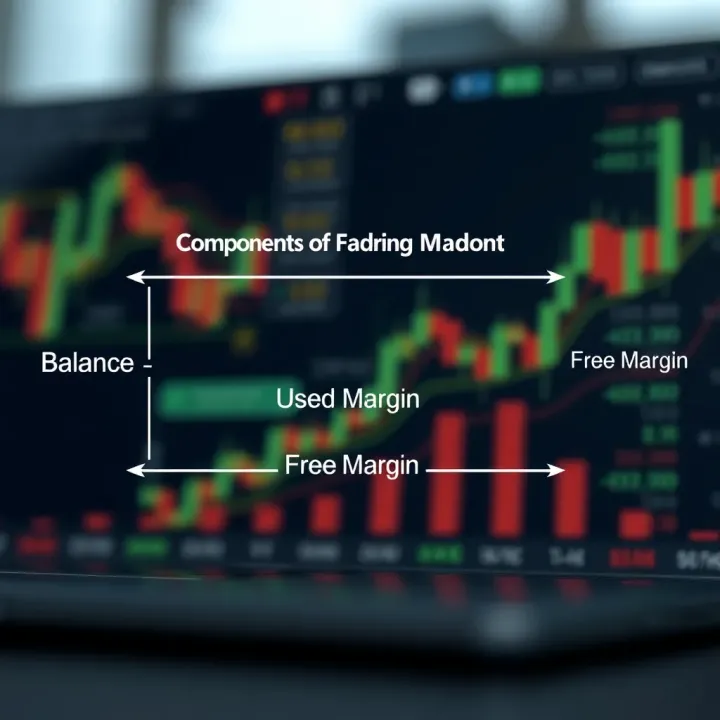
Free margin acts like your backup fuel; without enough of it, your trades may stall or get cut off.
To calculate free margin, use:
where Equity is your total account balance plus or minus any profit or loss from your open trades. Suppose you start with KSh 50,000, open a position requiring KSh 5,000 margin, and your trades currently show a profit of KSh 2,000. Your equity is KSh 52,000, so your free margin is KSh 52,000 – KSh 5,000 = KSh 47,000.
Monitoring free margin is essential because low free margin levels increase your risk of a margin call or forced trade closure by your broker. This can wipe you off the market and cause losses. Kenyan traders often face volatile currency movements, so having sufficient free margin provides room for manoeuvre.
To manage free margin effectively:
Always track your equity and used margin in real-time.
Avoid overleveraging; high leverage consumes margin quickly.
Use stop-loss orders to contain losses.
Consider your free margin before opening new trades.
Understanding free margin helps keep your forex trading sustainable. It’s not just a figure on your screen but a fundamental part of your risk management toolbox, especially given the dynamic nature of forex markets impacting the Kenyan shilling.
Understanding free margin is key for anyone trading in the forex market. It tells you how much money you have available to open new trades or keep current ones active. Think of it like the balance left in your wallet after setting aside cash as a guarantee for your ongoing forex positions.
Free margin shows the funds left on your account once the margin for open trades is accounted for. For example, if you start with KSh 100,000 in your trading account and have used KSh 20,000 as margin for open positions, your free margin is KSh 80,000. This amount is what brokers allow you to use for additional trades or to cover losses if the market moves against you. If your free margin dwindles close to zero, you risk a margin call where the broker may close your positions to protect its money.
Free margin is important because it directly influences your trading flexibility and risk exposure. A healthy free margin means you can handle sudden price swings without your trades being automatically shut down.
It’s crucial to distinguish free margin from related terms like equity and margin. Your equity is your total account value, including your initial capital plus or minus your profits and losses from open positions. Margin is the amount you've set aside to hold open trades — it’s like a security deposit with your broker.
Here's a simple breakdown:
Equity = Account balance + floating profits/losses
Margin = Money reserved to keep current trades open
Free Margin = Equity - Margin
For instance, if your equity is KSh 90,000 (due to losses on open trades) and your margin is KSh 20,000, your free margin is only KSh 70,000. This shrinking free margin indicates less room to open more positions or absorb losses without a margin call.
Managing these numbers carefully ensures you don’t get caught off-guard during volatile market movements.
Understanding these basics sets a solid foundation for managing your forex account effectively. In particular, knowing your free margin helps to plan entries, exits, and size positions safely, which is vital in the fast-moving forex market common to many Kenyan traders.
Calculating free margin is a critical skill for forex traders who want to understand how much cash they have available to open new trades or maintain existing ones without risking a margin call. In simple terms, free margin represents the difference between a trader’s equity and the margin currently tied up in open positions. Knowing this figure helps traders stay in control and avoid unexpected account liquidations.
Free margin depends heavily on two components: the account equity and the used margin. Account equity is the total value of a trader's account, including the initial deposit plus profits or minus losses from open trades. Margin is the portion of funds set aside to keep open positions active.
To calculate free margin, you subtract the used margin from the account equity:
For instance, if your account equity stands at KSh 100,000 and the margin used for current positions is KSh 30,000, your free margin is KSh 70,000. This KSh 70,000 is what you can safely use to enter new trades or buffer against losses.
Consider this example: A trader deposits KSh 150,000 in a forex account. They open a position that needs KSh 50,000 margin. As the market moves, the position shows an unrealised profit of KSh 20,000, so the equity becomes KSh 170,000 (150,000 + 20,000). The used margin remains KSh 50,000 unless more trades are opened or closed.
Using the formula, the free margin is:
Free Margin = Equity (KSh 170,000) – Margin (KSh 50,000) = KSh 120,000
This means the trader has KSh 120,000 available for new trades or to absorb potential losses. If the market swings the other way and the unrealised profit becomes a KSh 20,000 loss, equity drops to KSh 130,000. The free margin then shrinks to KSh 80,000, indicating less room for risk.
Another instance involves leverage. Suppose you trade with 1:30 leverage, and you buy a position that requires KSh 10,000 margin. Your equity is KSh 50,000. Here, your free margin would be:
KSh 50,000 – KSh 10,000 = KSh 40,000
Even though leverage amplifies potential profits or losses, knowing free margin helps you avoid overtrading beyond your capacity.
Monitoring free margin actively helps you assess your trading capacity, avoid margin calls, and manage risks effectively in the fast-moving forex market. Traders in Kenya and beyond can safeguard their capital by understanding and regularly calculating their free margin using straightforward equity and margin figures.
Free margin plays a key role in forex trading by allowing traders to open new positions and manage existing ones effectively. It acts like a buffer of unused funds in your trading account, helping you avoid unnecessary liquidations when markets move against your positions. Without enough free margin, even a small price swing can trigger a margin call, forcing your broker to close some or all of your trades.
Free margin determines how many trades you can open at any given time. Suppose you have a trading account with KSh 100,000 and your used margin is KSh 30,000. Your free margin is the difference, which is KSh 70,000. This amount is available for opening new trades or increasing the size of existing positions. For example, if you spot an opportunity in USD/KES that requires a margin of KSh 50,000, your current free margin allows you to execute that trade without needing an additional deposit.
Besides new trades, free margin also helps in position management. Traders often adjust stop-loss or take-profit levels, or even hedge positions. These actions require some free margin to absorb possible fluctuations. Having sufficient free margin lets you manoeuvre your trades strategically rather than being forced into premature closures.
Maintaining a healthy free margin is essential to manage risks and prevent margin calls. When your open positions start making losses, your equity decreases while the margin remains the same, causing free margin to shrink. If it drops close to zero, your broker may issue a margin call or close some positions automatically to protect your account from going into negative balance.
Consider a trader in Nairobi with an account holding KSh 200,000 equity, where KSh 150,000 is tied up in margin for open trades. If the market goes against the trader’s positions, equity might fall to KSh 160,000. This leaves only KSh 10,000 as free margin, a risky situation. The trader should either close some positions or add funds to avoid margin call.
Tip: Monitor your free margin frequently during volatile market sessions, such as around Central Bank of Kenya’s interest rate announcements or major global news, to avoid unexpected margin calls.
Using free margin wisely helps you maintain control over your trading account and reduces forced liquidations. It’s a practical tool for managing both trading opportunities and risks, especially for Kenyan traders navigating fluctuating markets and the unique challenges in local forex trading.
In summary, free margin is more than just a number on your trading platform; it dictates your flexibility and survival in the forex market. Managing it well can be the difference between steady profits and sudden account closure.
Free margin in forex trading does not sit in isolation; it fluctuates continually as several factors influence its size. Understanding what moves your free margin helps you manage risk better and make informed trading decisions. Below are key elements that affect your free margin.
Open positions directly reduce your free margin. When you place a trade, a portion of your account balance becomes the used margin, set aside to keep trades open. For example, if you have KSh 100,000 in your account and open a trade requiring KSh 20,000 margin, your free margin drops to KSh 80,000. The more positions you hold, or the larger their size, the higher your margin used and the smaller your free margin becomes. Monitoring this prevents you from overtrading, which can quickly lead to margin calls if the market turns against you.
Market movements constantly impact your free margin because they change your account equity. For instance, if your open positions gain profit, your equity rises, and so does your free margin. Conversely, losses reduce equity, shrinking free margin. Say you have a profitable position adding KSh 5,000; your free margin swells by that amount, but if the position drops by KSh 5,000, free margin tightens. Kenyan traders should watch how the long and short rains seasons or economic events like CBK announcements influence forex markets, as sudden shifts can affect your margin availability unexpectedly.
Leverage amplifies both your potential profits and risks and plays a vital role in determining margin requirements. Higher leverage means you can hold larger positions with less margin. For example, trading with 1:100 leverage means for every KSh 1,000,000 position, you need KSh 10,000 margin. This frees up more of your capital as free margin, but it also means losses grow quickly, risking your entire account. Kenyan traders often get attracted to high leverage but should balance this with sound risk management to avoid wiping out their free margin too fast.
Keep a close eye on how your trades, market changes, and leverage combine to affect free margin. This helps you avoid margin calls and trade confidently without unexpected surprises.
Understanding these factors lets you plan your entries, exits, and position sizes better. Maintaining healthy free margin is essential for sustained forex trading success, especially in markets as dynamic and fast-moving as forex.
Managing free margin is central to staying afloat and profitable in forex trading. It lets you keep your trading account healthy by giving you enough buffer to open new trades or absorb market swings. Without proper free margin management, you risk hitting margin calls or forced closures by the broker, which can quickly wipe out your earnings or even your capital.
Keep a close eye on your account equity and margin requirements daily. Free margin constantly changes as market conditions fluctuate, so relying solely on initial figures is risky. Most trading platforms show free margin as part of the account summary — check it after every trade or at least once a day. For example, if your account balance is KSh 100,000 and your open positions are tying up KSh 30,000 margin, your free margin is KSh 70,000. If this drops to below KSh 10,000 during volatility, it's a red flag to reconsider your exposure.
Set alarms or notifications on your trading app for low free margin levels. Some platforms allow you to pre-set alerts when margin usage exceeds a set percentage. This helps react quickly before margin calls occur. Also, keep a simple trading journal to track how trades impact your free margin over time, spotting patterns that threaten your stability.
One effective strategy is to use smaller lot sizes or reduce the number of open positions. For instance, instead of opening three large trades simultaneously, it may be wiser to stick to one or two and keep some free margin intact. This approach limits risk and leaves room for margin to cover adverse price movements without triggering a margin call.
Another tip is to avoid overleveraging. While high leverage, like 1:100, may seem tempting, it quickly consumes free margin on slight market swings. Using moderate leverage gives you more room to breathe. For example, trading at 1:20 leverage instead of 1:100 in the Nairobi Securities Exchange context means your margin requirements are lower and safer for your KSh capital.
It also helps to keep some funds aside as a free margin reserve, separate from the amount you actively trade with. Some Kenyan traders keep at least 20% of their account balance untouched to prevent sudden liquidations during market volatility periods, like around major economic releases or unexpected political events.
Maintaining a healthy free margin is about balancing ambition and caution: it supports your trading activity while safeguarding your funds from sudden shocks.
Ultimately, disciplined monitoring combined with sensible risk management prevents your free margin from hitting dangerous lows, letting you trade confidently and think beyond the next deal. Kenyan traders who master this can avoid the common pitfall of margin calls and survive the ups and downs of forex markets more comfortably.
Explore how the Deriv pip calculator helps Kenyan forex traders easily calculate pip values 🤑 and refine trading strategies for better decision-making 📊.
📈 Discover how Kenyan investors can trade CFDs safely! Learn what CFDs are, pros & cons, plus tips for effective trading in financial markets.
Explore Deriv's peer-to-peer trading system 🔄, its benefits, risks ⚠️, security 🔐, and tips tailored for Kenyan traders 🇰🇪 to trade smarter.
Explore Deriv trading in Kenya 📈! Learn platform features, trade types, risk strategies & expert tips to trade smartly and safely. Start with confidence! 💼
Based on 9 reviews